

Pewley Hill Mobilisation Centre : Alec Beanse
 |
 |
 |
 |
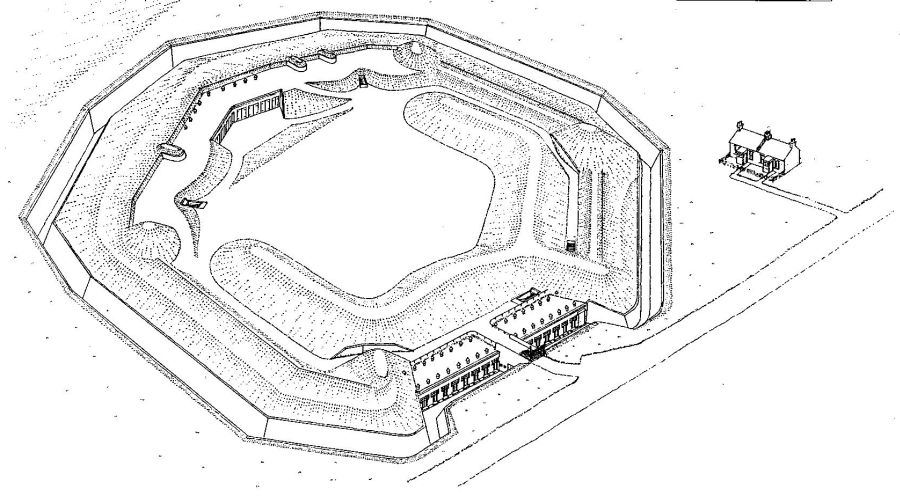
Isometric drawing of Pewley Hill |
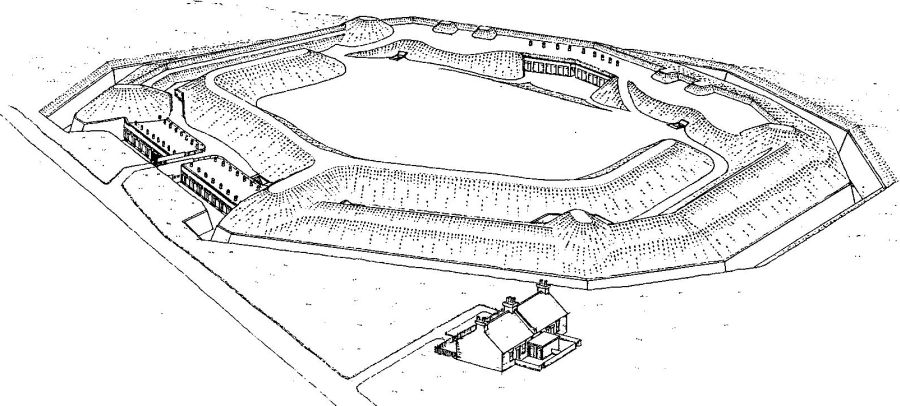
Isometric drawing of Pewley Hill |
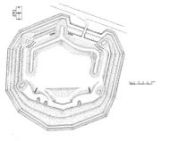
Plan of Pewley Hill |
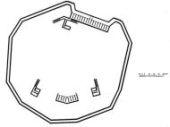
Plan of Pewley Hill |
Aerial view of Pewley Hill on Google Maps
Following the sale of Pewley Hill it was used for archive storage following substantial alterations. Some of the following photos may require some imagination to make total sense of.
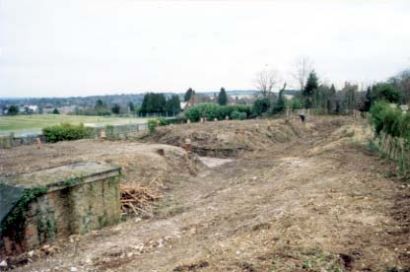
At the rear of the site the ditch scarp contained a row of casemates and a capomier, the roof of which formed the access to the work. Part of the conversion roofed over the ditch along this section roughly doubling the storage space available and causing initial confusion when we visited.
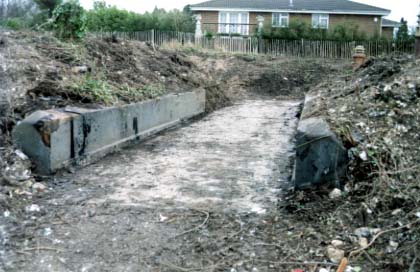
The entry to the site over the caponier roof. Facing is the remains of the rampart at this point.
|
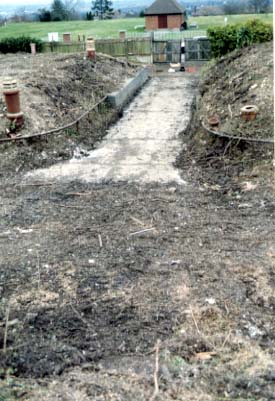
And a view from the inside looking back towards the road. |
|
You are not actually inside at this point. Entry entailed passing through an opening at the far end, now filled, or going down stairs inside the later brick structure to the left. |
|
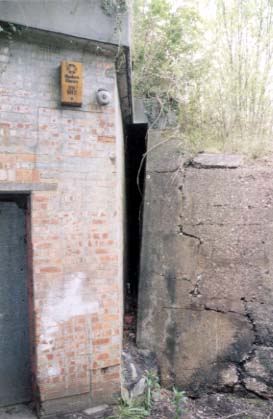
A ramp was cut down into the ditch through the concrete counterscarp. The concrete each side of the brickwork are the original ditch walls and the brickwork the later alteration. |
|
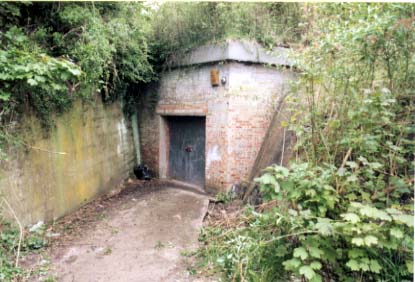
This shows the new brick structure and the concrete counter scarp of the ditch. |
|
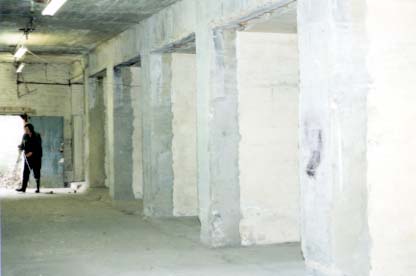
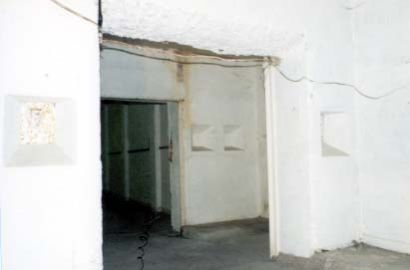
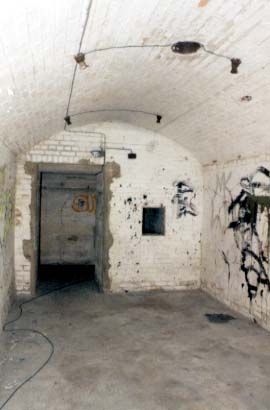
Inside the fronts of the casemates can be seen to the right. Note the rendering where stub walls have been removed. These originally reduced the width of the openings and took a pair of doors with a full width window above. |
|
Above one of the casemates is a sign still just readable - GORGE CASEMATES. Brick walls with doors were inserted at the rear of each casemate, thery originally opened onto a passageway runnling the length of the casemate block. |
|
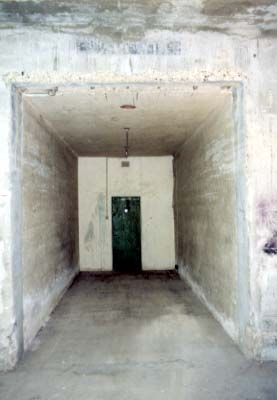
In the centre of the casemate block is the caponier. |
|
There were two pairs of loopholes each side with doors between them. The doors were to allow stores to be moved along the bottom of the ditch to the required casemates, easier than trying to get them along the narrow passage at the back. Note the steel plates set into the loophole openings. |
|
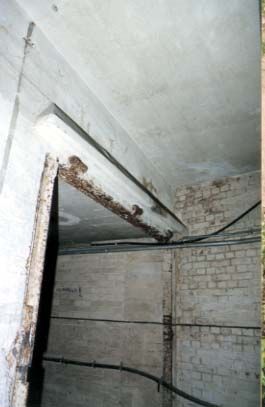
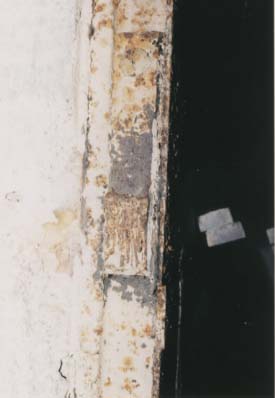
At the west end is something of a mystery. The end casemate has a moulded lip and drip over the casemate opening and a steel frame set into the opening. Along the top are three hinge pins and remains of two fittings, one each side that look as though they may have been hooks though these are now cut away. It's just speculation but there may have been some sort of apparatus here to get the stores up and down from the casemate to ground level. |
|
|
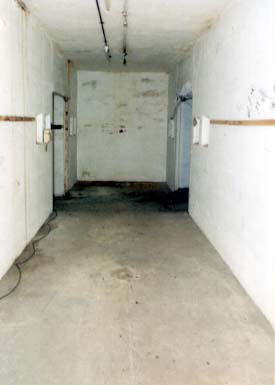
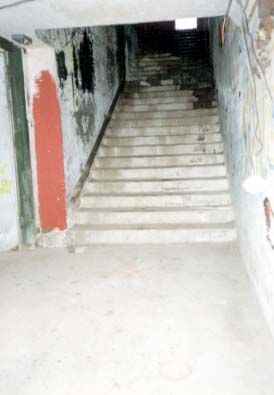
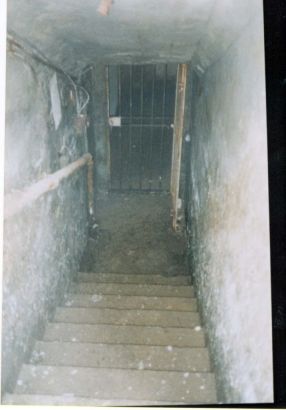
Stairs lead down to the back of west end of the casemates from the brick structure mentioned previously and a door leads into the back to the end casemate. The fram of the door can just be seen to the left. From the bottom of the stairs a dog-legged passageway leads off. |
|
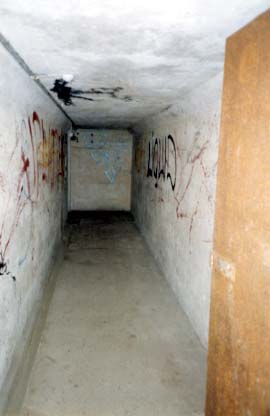
Opening off this passage is another passage that contained a shifting lobby and lead to a small magazine. |
|
|
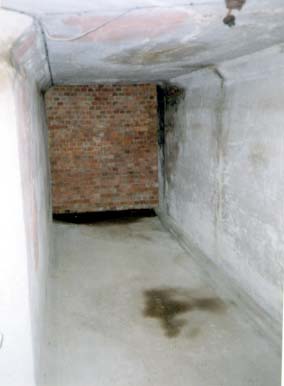
Beyond the brick wall at the end of the dog-leg another stair originally lead up into the fort itself. |
|
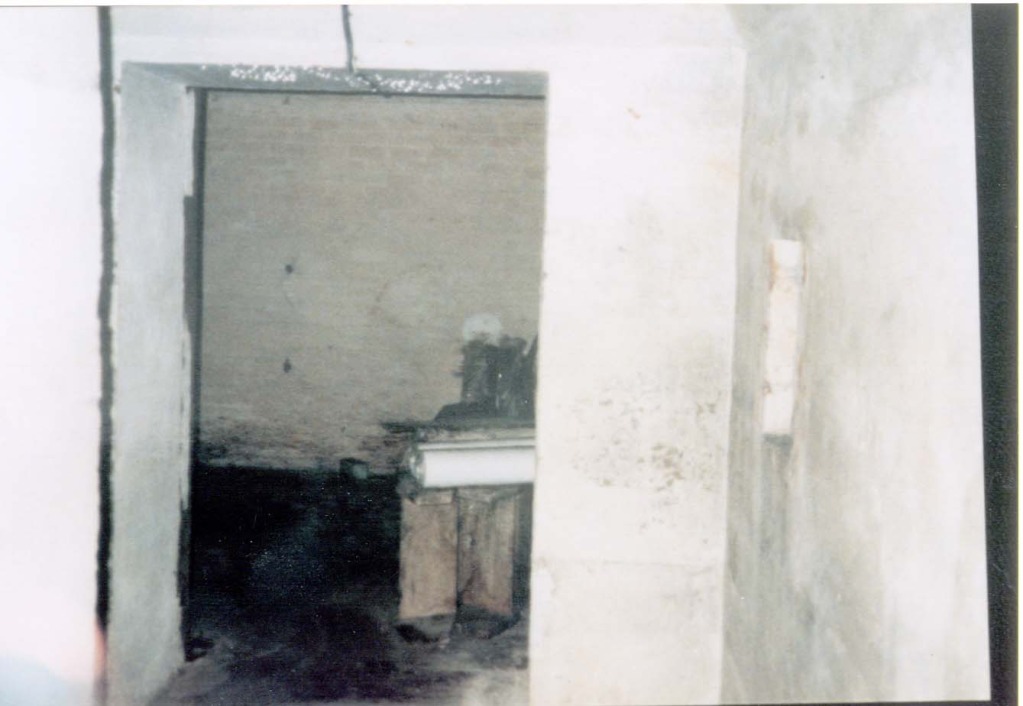
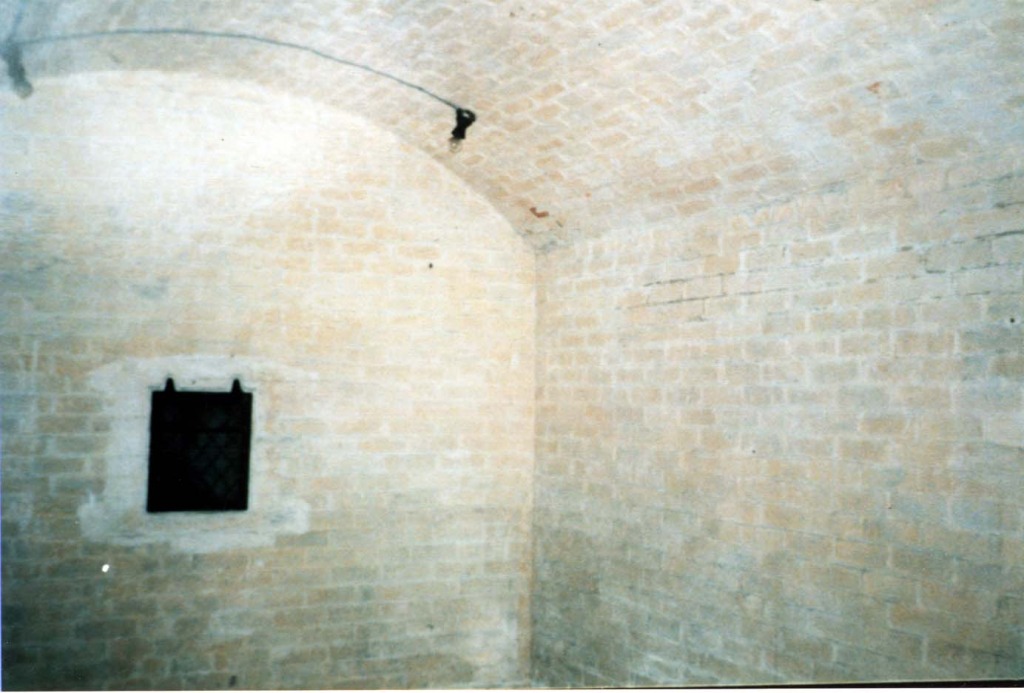
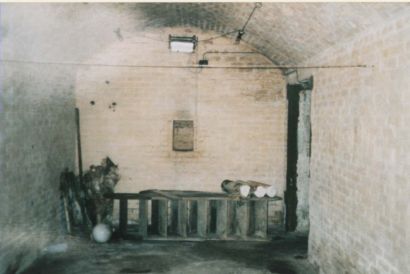
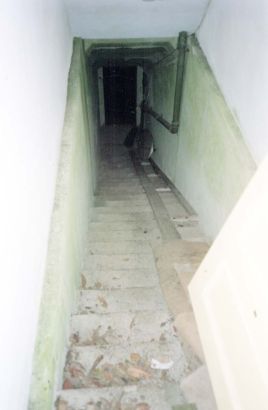
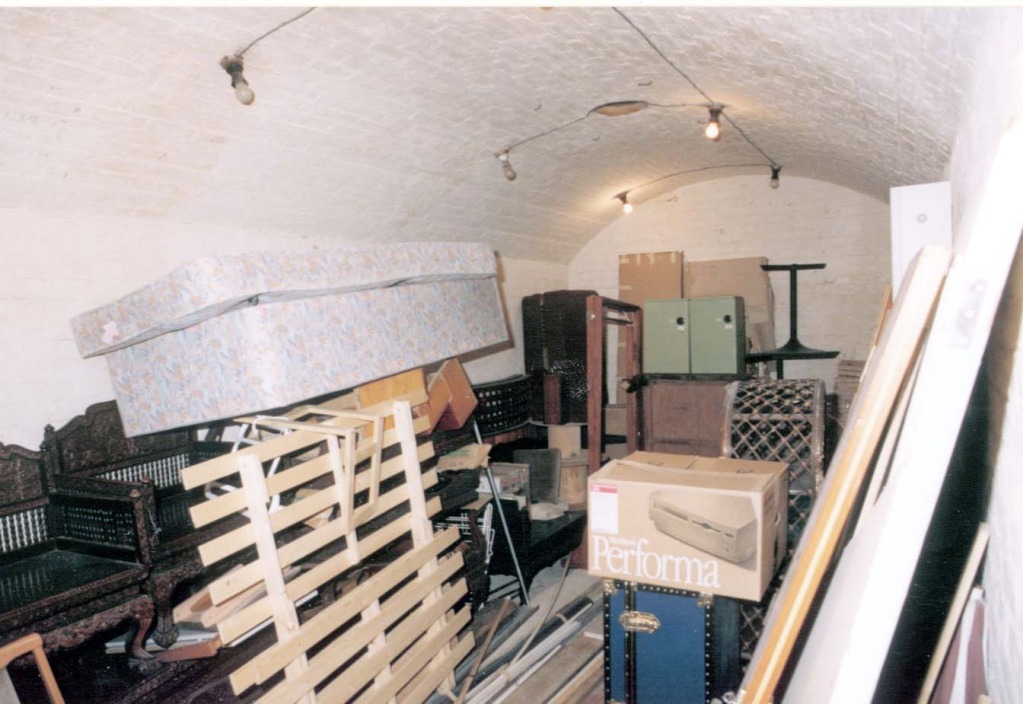
All of the above structures are now underneath three detached houses and are no longer accessable. Inside the work are two main magazines comprising a shell and cartridge store separated by a passage that contained the shifting lobby for the cartridge store. The magazine in the southwest corner was blocked for structural reasons but the owner of the house above it had a few photos of it. First the stairway down to it. |
|
Inside the entrance. The door to the shell store is straight ahead and a lamp recess to the right. |
|
The cartridge store. |
|
And the shell store. |
|
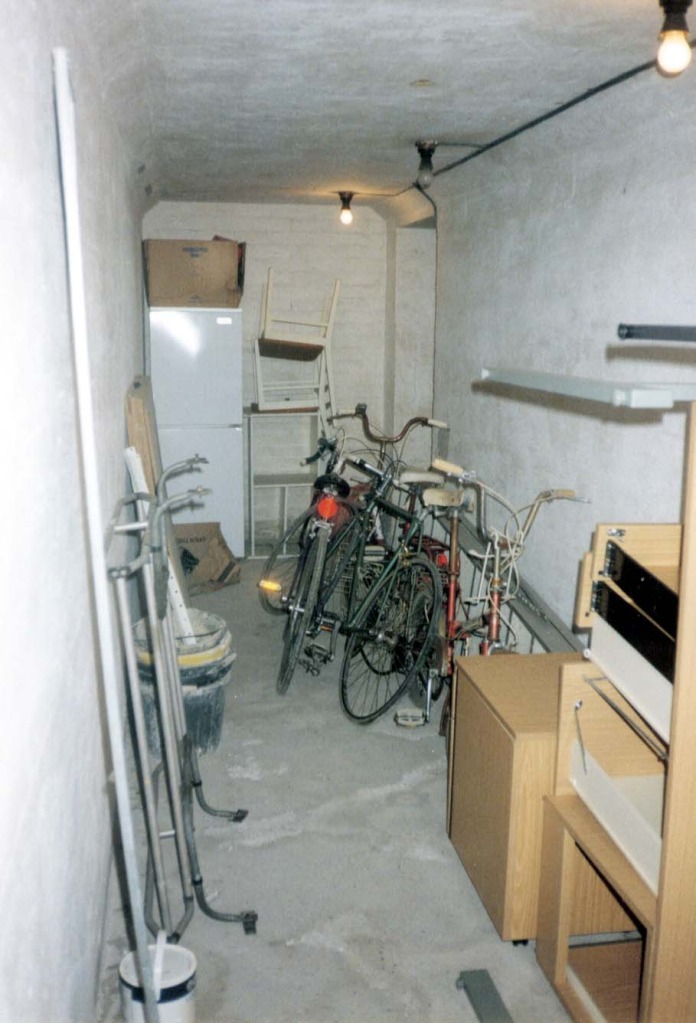
The magazine in the south east corner is identical but opposite handed. It is still used by the owner of the house built above it as a store as the photos will show. The stairway giving access. |
|
The shell store. |
|
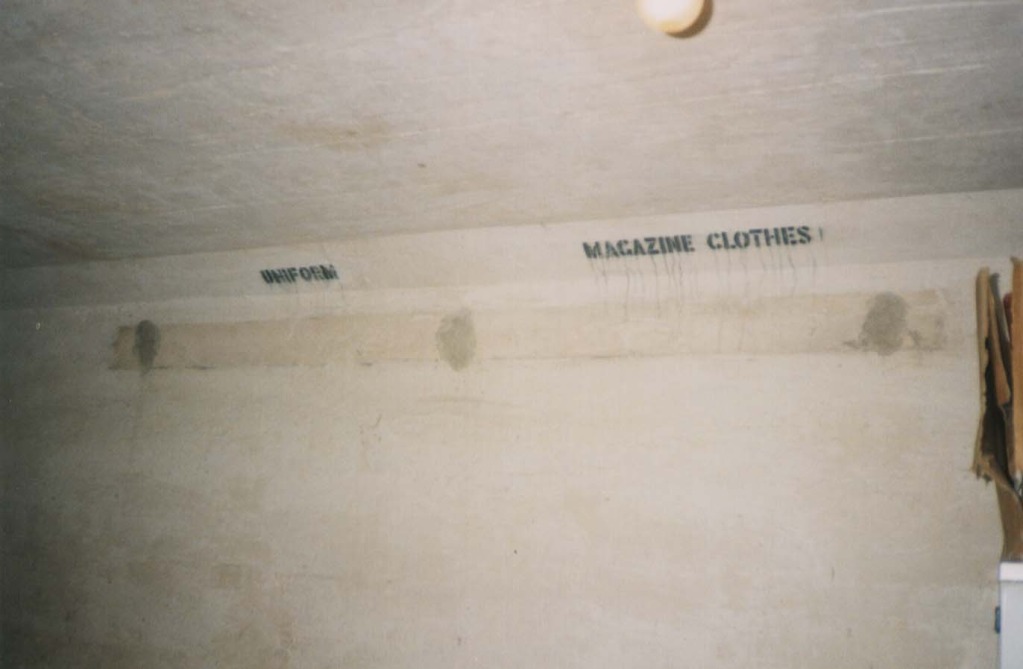
The passage between the magazines. Lettering for the shifting lobby can just be made out above the fridge at the far end and beyond that on the other side the door to the cartridge store. |
|
The lettering referred to above. |
|
And the cartridge store. The lamp recess can just be seen at the far end. |
|
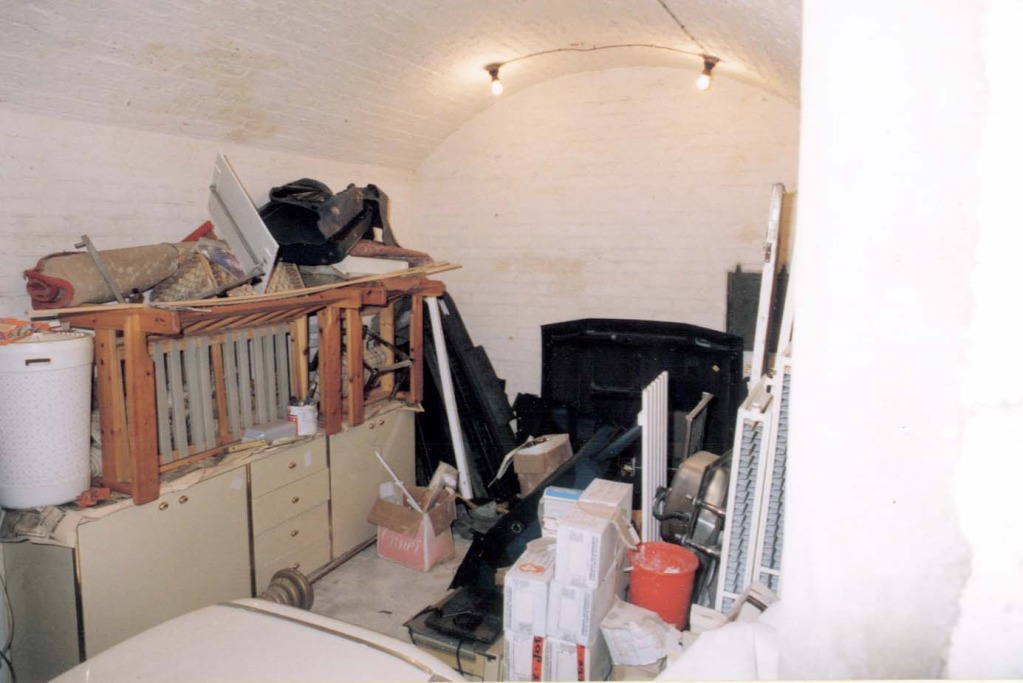
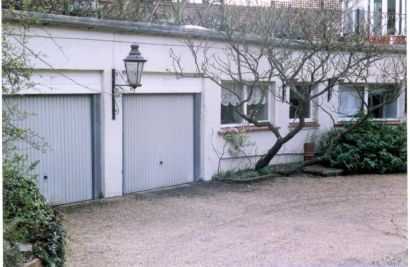
Between the two magazines set in a shallow 'V' is a casemate block. It contained six chambers thought to be gun casemates or shelters and three store rooms. This block has been incorporated in to a house a a single storied extension with the roof acting as a terrace. As can be seen two of the casemates are used as garages and the remainder bricked up and converted to rooms. |
|
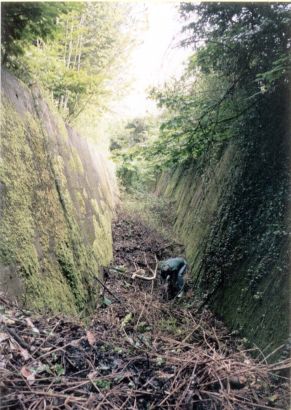
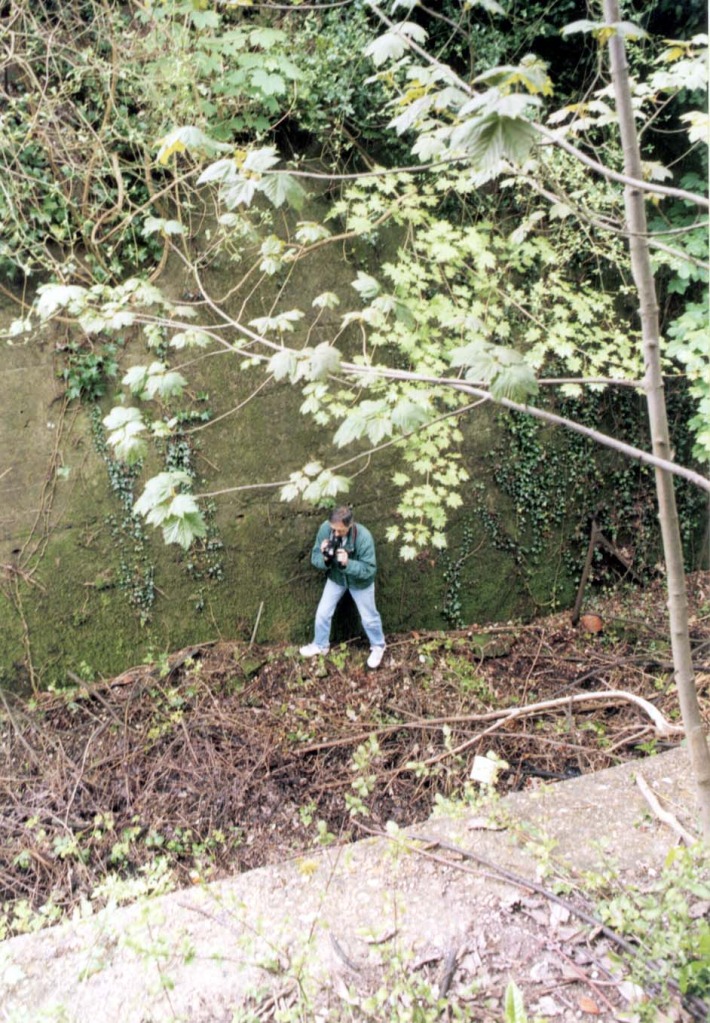
Finally a short section of ditch survives on the east side. Unusually with in the Mobilisation Centres it is deep and steep sided with both the scarp and counter scarp reveted in concrete. |
|
|
The London Mobilisation Centres by Alec Beanse and Roger Gill
 |
|
Order form here: |
Buy from Amazon.co.uk |