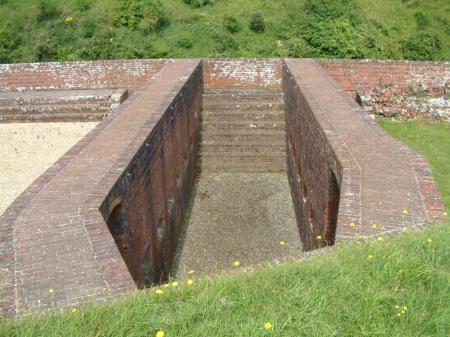
6. Firing Steps
Whilst the fort was under attack, the local defence provided by the caponiers would have been supplemented by soldiers manning the firing steps that run round around the top of the inner ditch wall. Because of the way that the outer approaches to the fort were constructed, soldiers standing on these firing steps would always have the enemy silhouetted against the skyline, whilst they would have been unseen until the attacking forces arrived on the very edge of the counterscarp. The firing steps would have been manned by infantry regiments mobilised in time of need for this very purpose.
The firing steps were protected by flanking galleries with gates. If the fort was overrun by an attacking force these gates would be locked and the galleries used by the defenders to retreat to the mortar batteries and then down the spiral staircases to tunnels beneath the parade leading to the barracks and redan.
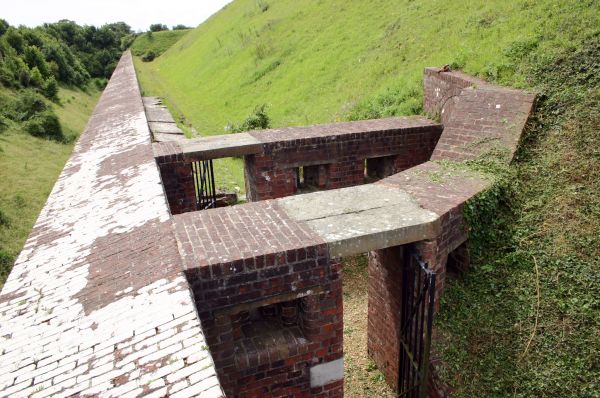
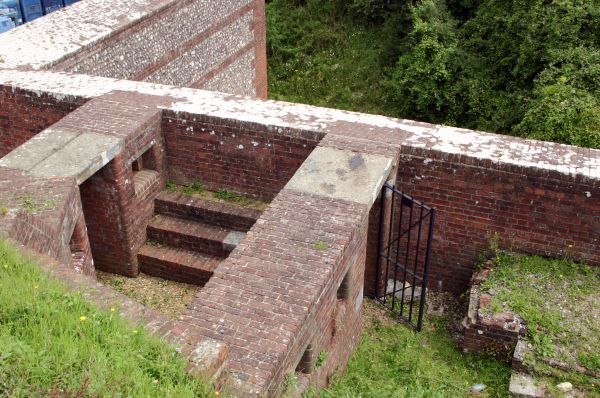
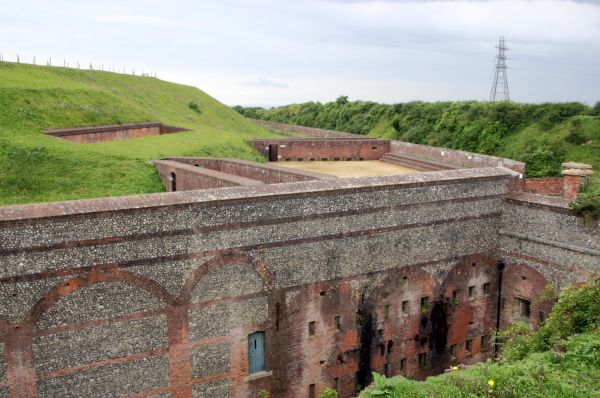
The firing steps were flanked by rifle galleries leading from the mortar batteries.