

6inch H.P.
|
Early pattern 6-inch H.P. |
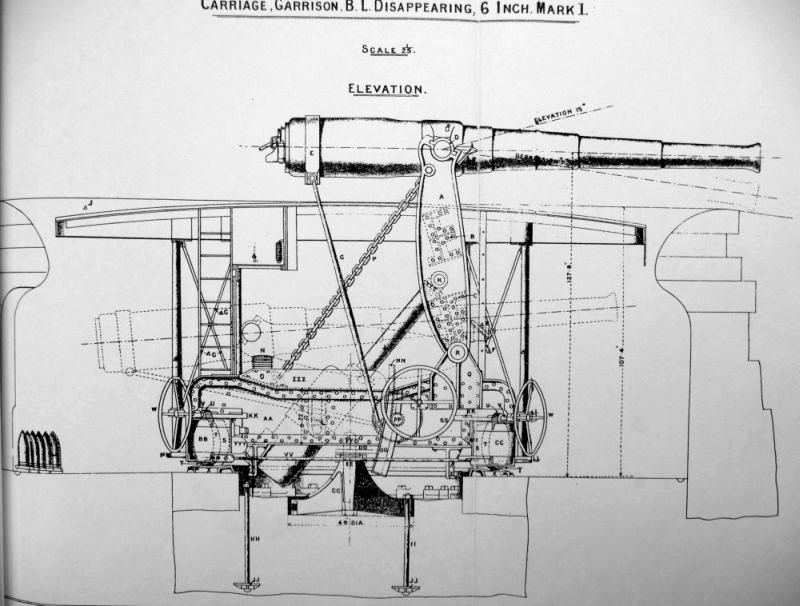 |
6-inch H.P. Mark I |
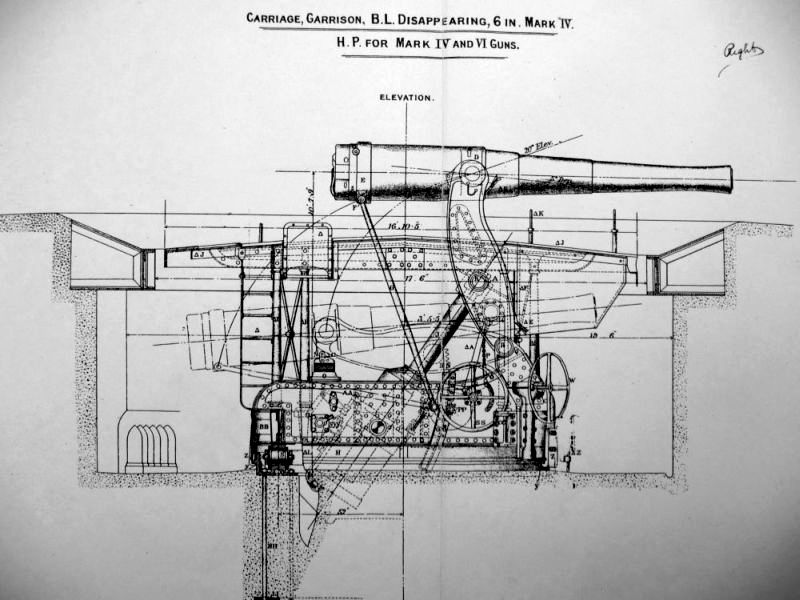 |
|
6-inch H.P. Mark IV |
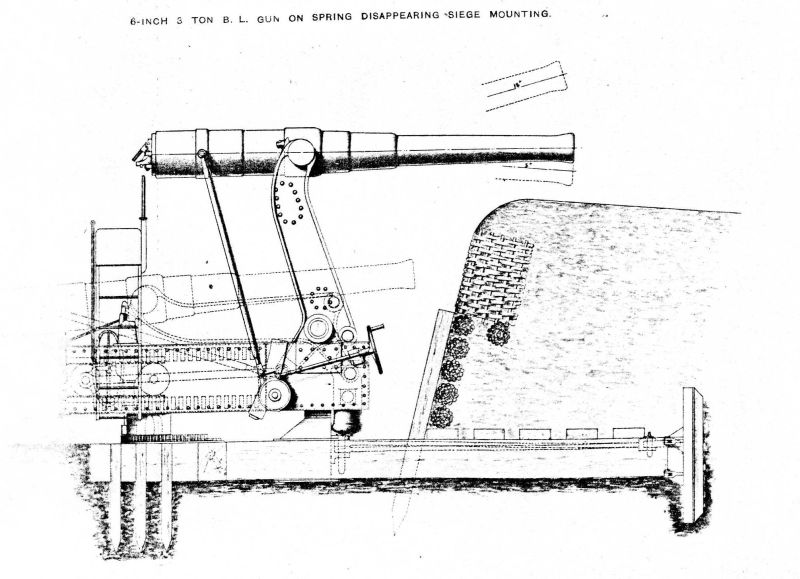
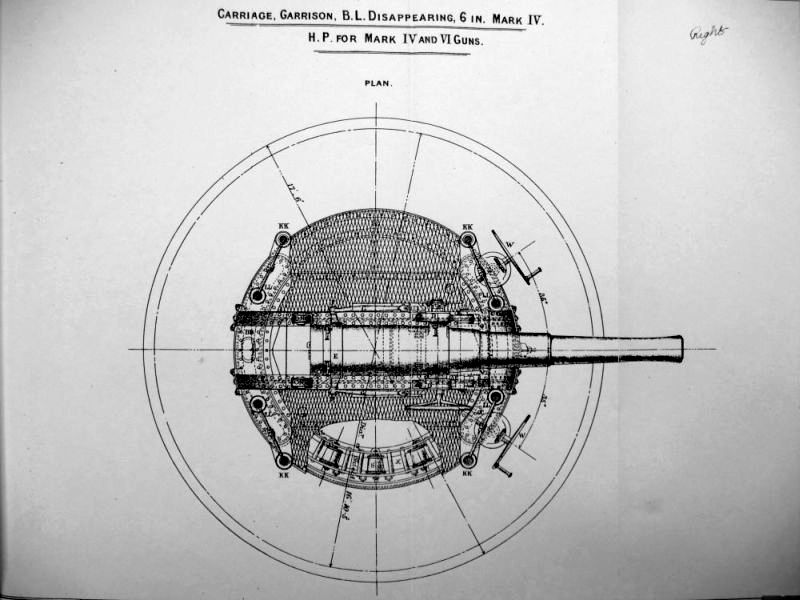
9.2-inch H.P.
|
9.2-inch H.P. Mark I |
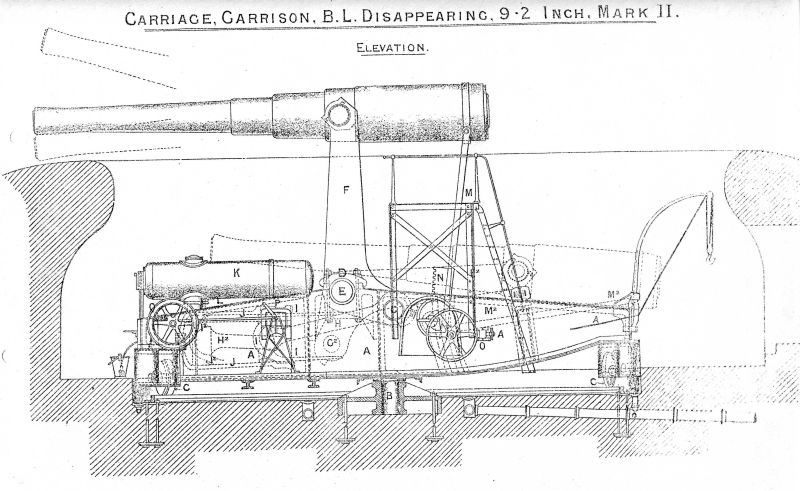 |
9.2-inch H.P. Mark II |
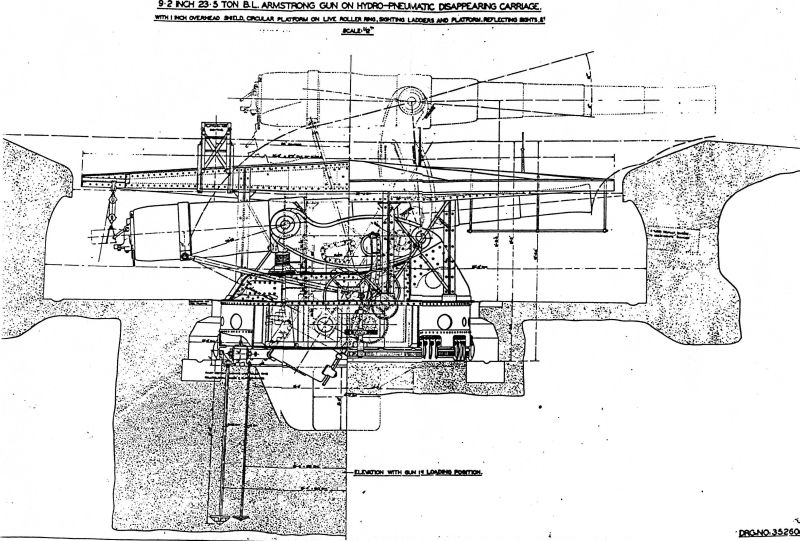
10-inch H.P.
|
10-inch H.P. Mark I |
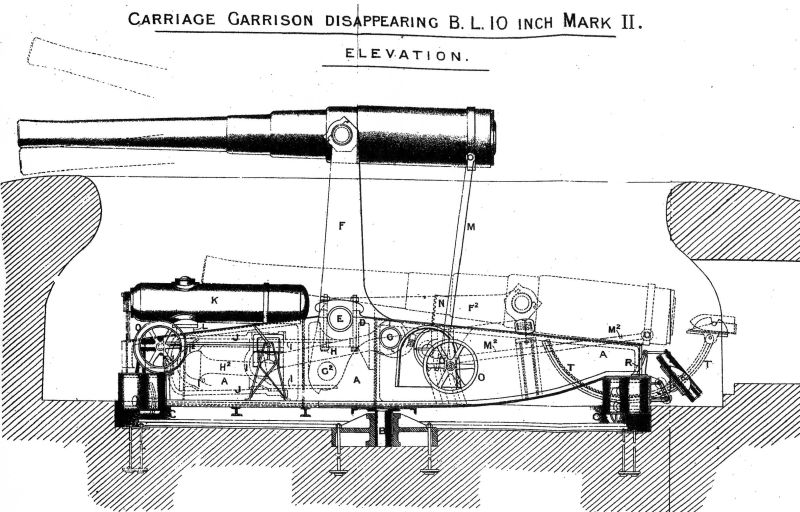 |
10-inch H.P. Mark II |
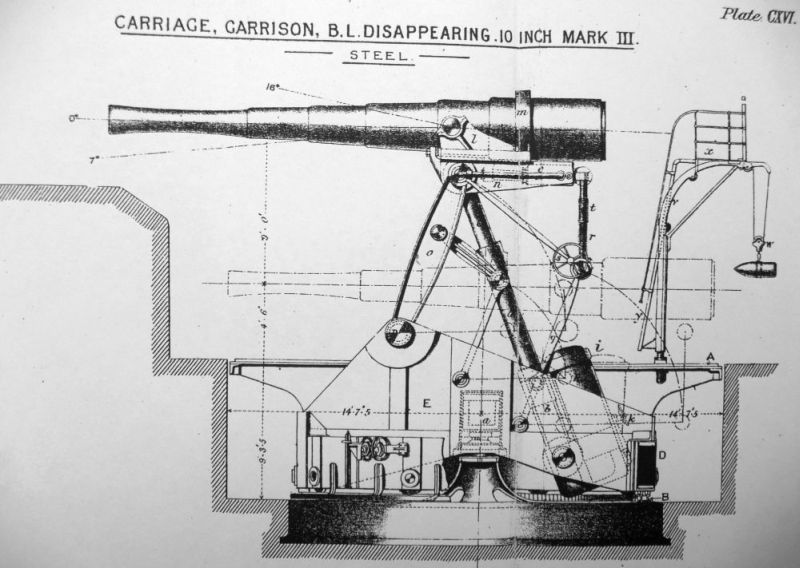 |
10-inch H.P. Mark III |
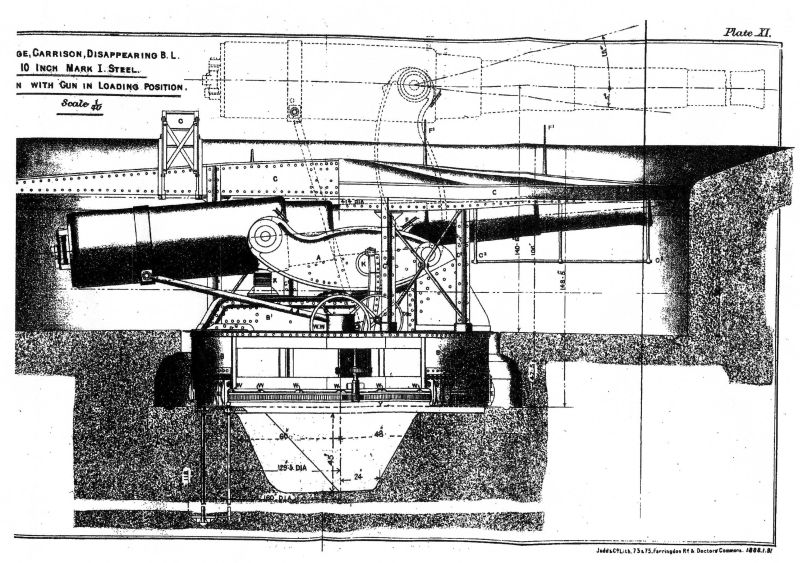
The Hydropneumatic Disappearing Mounting
Although Moncrieff Continued to experiment with his System of mounting guns using counterweights (Moncrieff Mountings) he was also experimenting with a carriage in which the recoil was checked using a system of Hydropnematic cylinders. These were known as H.P. Disappearing Mountings.
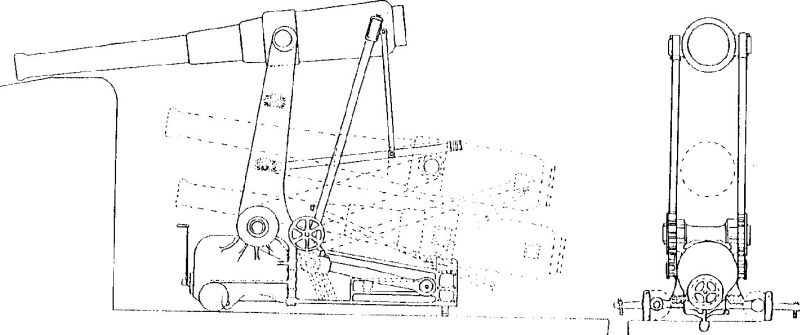
Moncrieff's early design for a B.L. H.P. disappearing mounting
The idea of a gun which could remain invisible to an attacking force except when firing was considered worth the enoromous cost of experimentation.
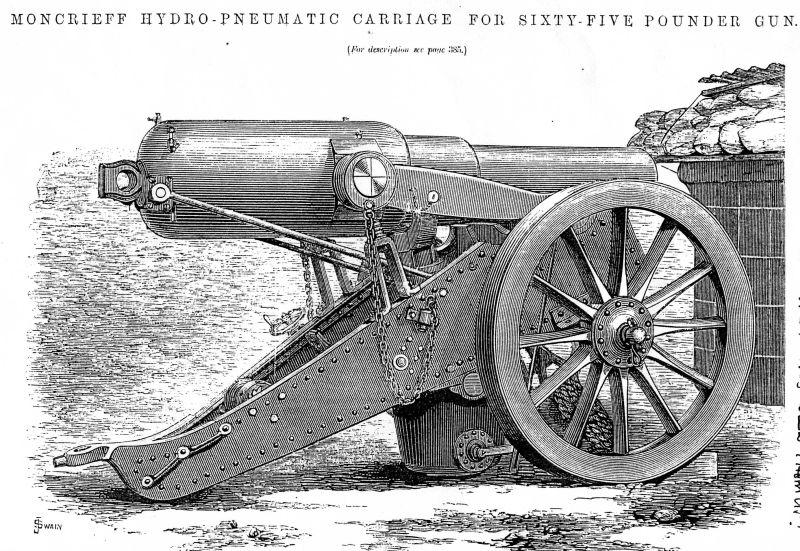
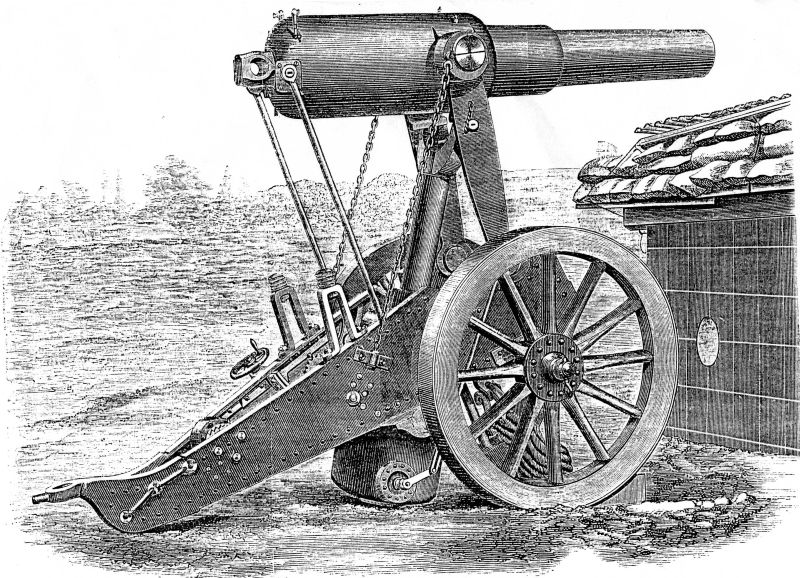
As early as 1874 Moncrieff had been investigating the application of a hydropneumatic disappearing principle to siege carriages for the 64pr R.M.L. for use on land front works and siege trains. On December 3 1875 an article in The Engineer gave a brief history of the invention and illustrated one of Moncrieff's mountings. In 1878 Moncrieff modified verisons for the 6.6-inch R.M.L. and the 8-inch howitzer. Six of the 64pr version were ordered for trial but were abandoned. The rival Royal Carriage Department alternative was declared a failure. It was approved for the 6.6-inch howitzer only although the 8-inch howitzer was fired off it sucessfully and some were allotted to the siege train. Plans were considered for mounting the 4-inch and 5-inch B.L. on travelling H.P. carriages and the 5-inch on H.P. carriage was developed for service in India.
 |
 |
H.P. Siege Travelling Carriage Experimental No.34 from. The Engineer December 3 1875. |
H.P. Siege Travelling Carriage Experimental No.34 for the 64pr Mark II in the firing position.The Engineer December 3 1875. |
In 1877 the 6.6-inch howitzer siege platform became patent no. 3240. This patent hints that it was also designed to be mounted on turntables on board ships.
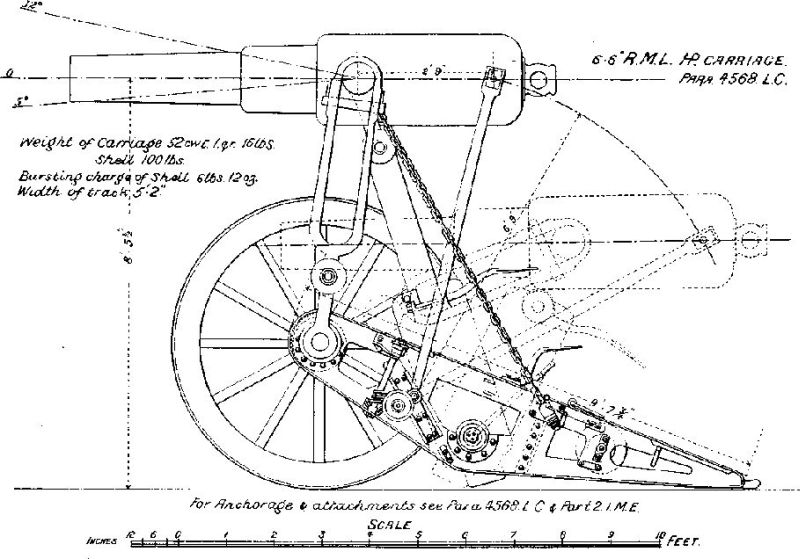
6.6-inch Hydropneumatic Siege disappearing mounting
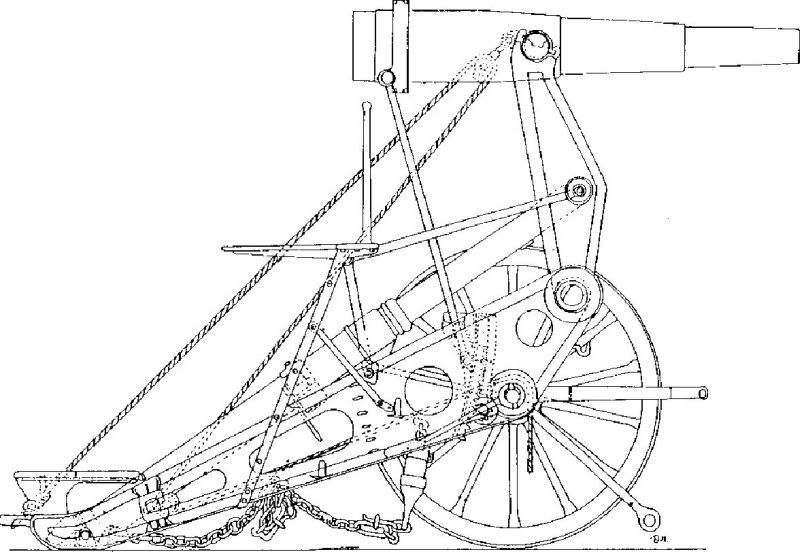
5-inch Hydropneumatic Disappearing siege mounting for 7-foot parapet
Six of the the H.P. siege platforms for the 5-inch B.L. were approved for armament on the faces of land front forts at Plymouth. In 1877 they were allocated a follows, 1 each at Ernesettle, Aagaton, Woodland, Crownhill, two at Staddon although Aagaton did not appear to receive one and Ernesettle received two. So did Staddon.
The Hydropneumatic principle was successfully applied to B.L. guns for coast defence including the large B.L. guns of 6-inch, 8-inch, 9.2-inch and 10-inch.
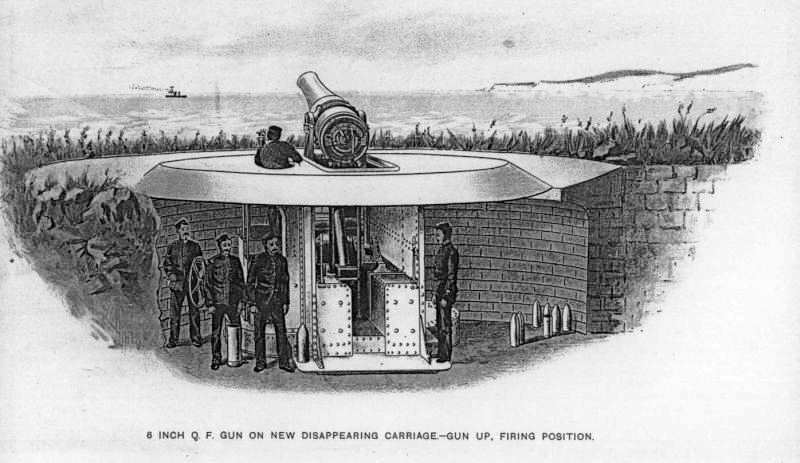 |
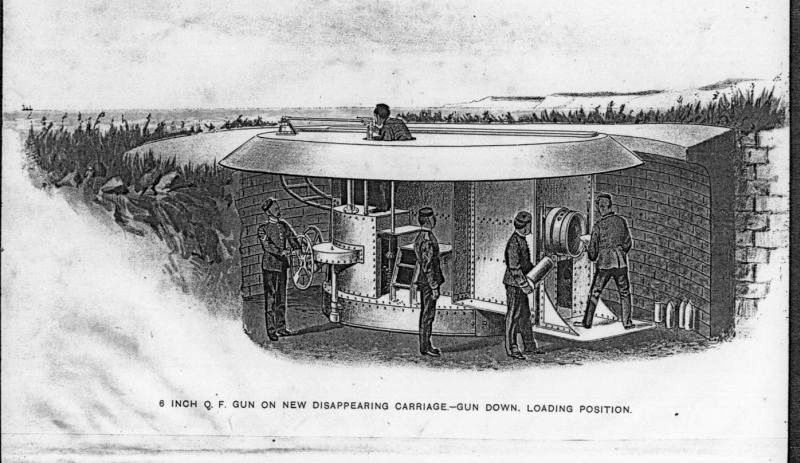 |
6-inch B.L. H.P. mounting in the firing and loading positions |
|
Three main manufacturers of ordnance developed systems for mounting guns on the Hydopnuematic (H.P.) principle. They were Moncrieff's Easton and Anderson Company, (E & A) Armstrong's Elswick Ordnance company (E.O.C.) and the Woolwich Royal Carriage Department (R.C.D.). Each put forward a design and these were tested before the Director of Artillery accepted them for service use. Tests for the 10-inch B.L. took place at Landguard (the E & A mounting) and at Shoeburyness. The 9.2-inch B.L. was tested at Grain.
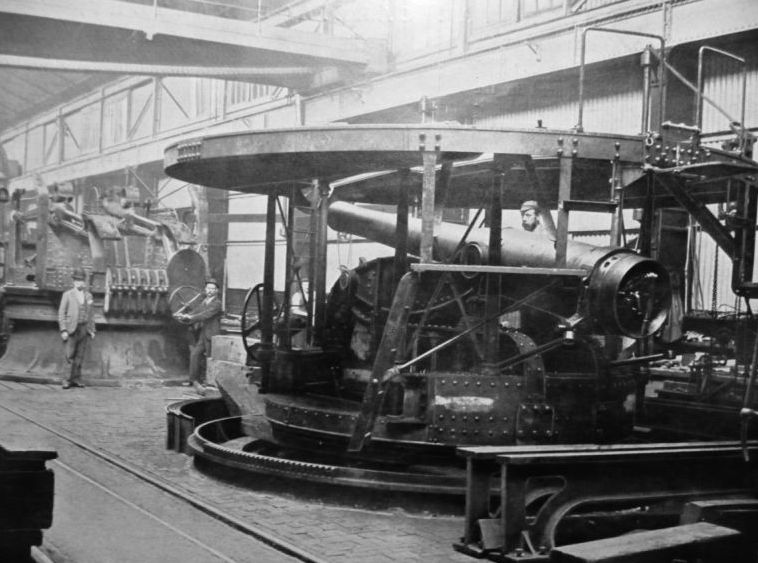 |
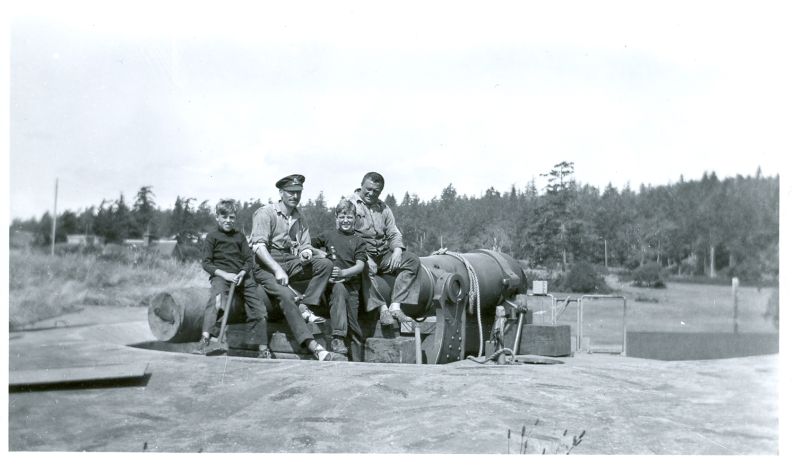 |
A 6-inch H.P. in the Royal Carriage Department South Erecting Shop 1899 |
A 6-inch B.L.H.P. at Fort Rodd Hill c1920 (Photo D. Buxton) |
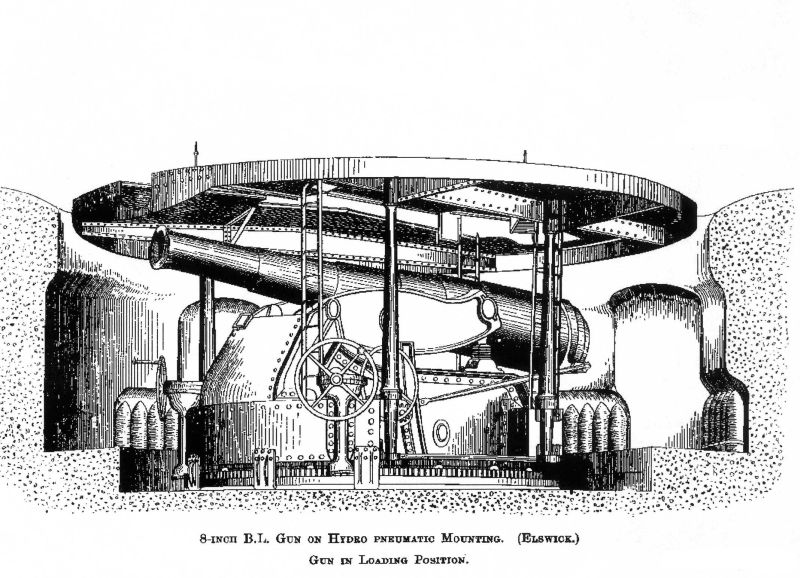 |
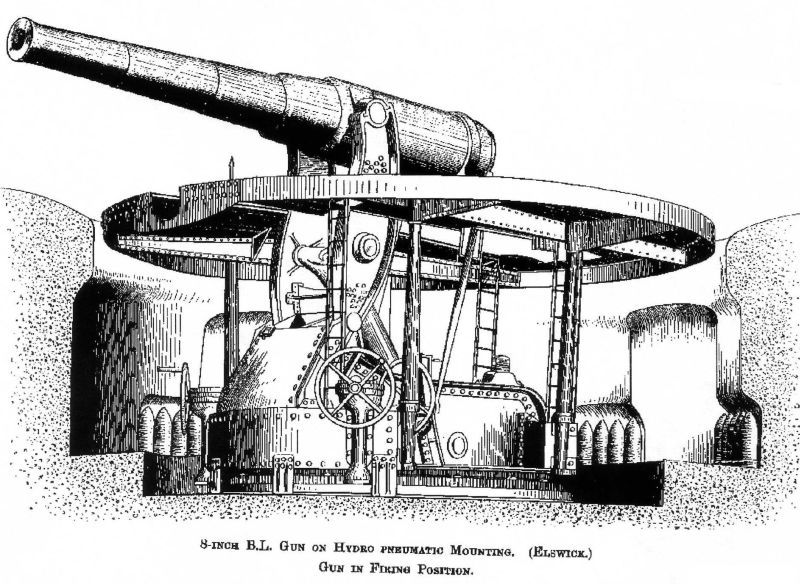 |
8-inch B.L.H.P. in the loading and firing positions (Elswick Ordnance Company design) |
|
 |
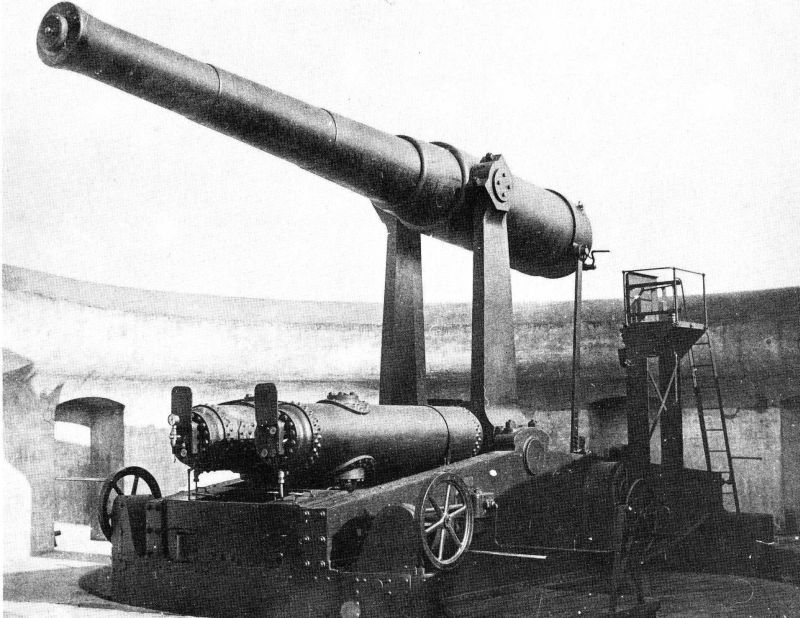 |
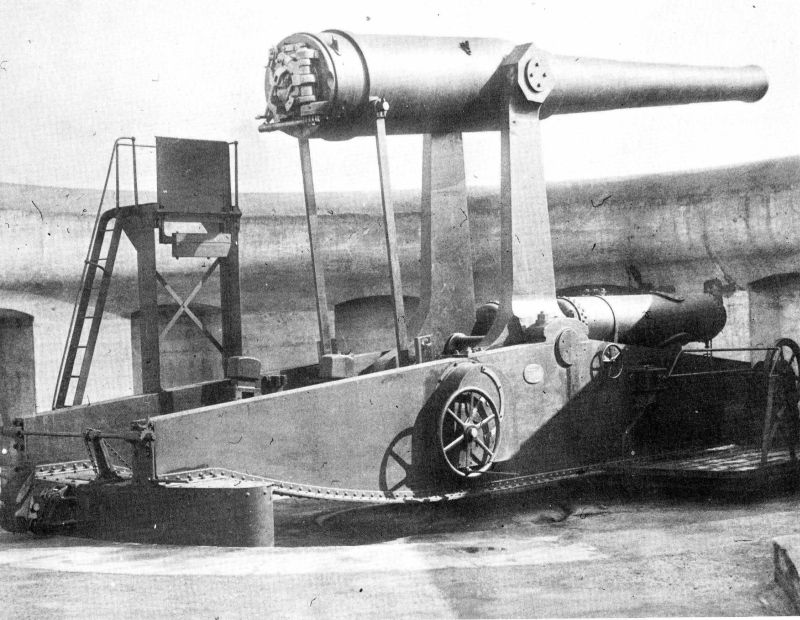
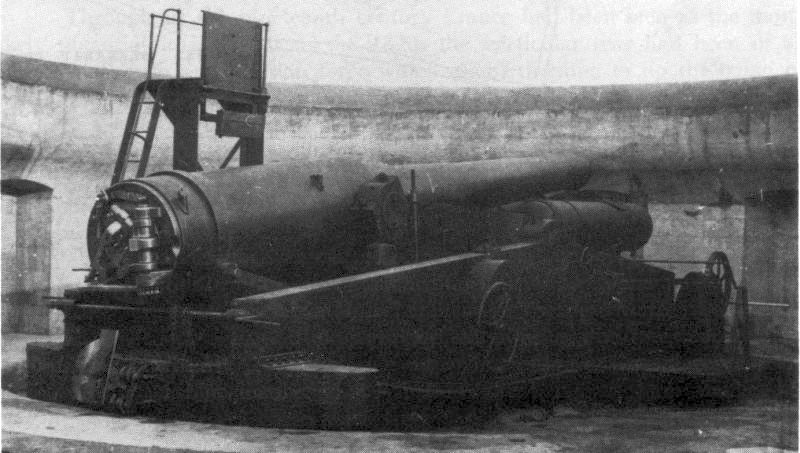
10-inch B.L.H.P. Mark II at Landguard Fort (Easton and Anderson design) Above: The gun in the run- up (firing) position Right: The gun in the run-back (loading) position |
 |
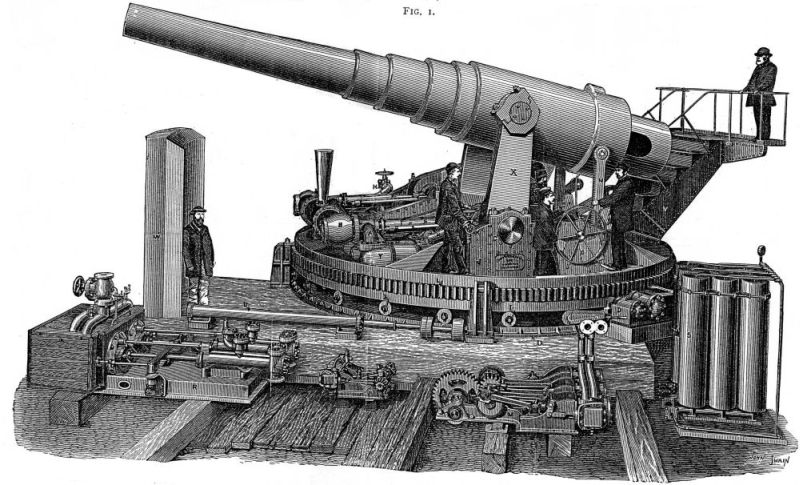
The British Government passed a bill that effectively deprived Moncrieff of all rights to his own invention. After a patent of 1887 Moncrieff abandoned disappearing guns altogether and concentrated on High Angle Fire guns instead, another blind alley. Moncrieff was sucessful in selling his invention to the Russians. In 1885 the Naval and Military Gazette reported on one of his Easton and Anderson mountings that had been adopted by the Russians for one of their new iron clads, the Catherine II. This was for two 12-inch 50-ton B.L. guns. H.M.S. Temeraire had a battery of 11-inch R.M.L.s mounted on H.P. carriages. This was the only ship of the Royal Navy to be fitted with this unusual type of mounting.
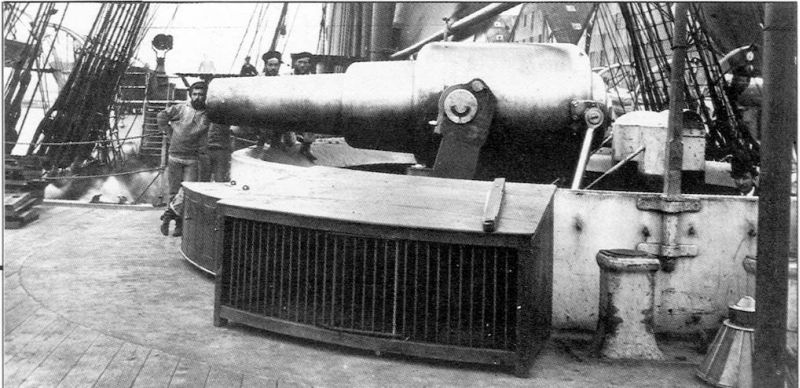
Armstrong sold some of his mountings to the colonies such a Victoria in Australia. The 6-inch B.L. Mark IV was adopted for service use in the U.K. and emplacements for this type of mounting can be found at Portsmouth, in Lumps Fort and the Eastney East and West Batteries. At Plymouth, two were mounted at Whitesand Bay Battery and two at Penlee Point Battery. Landguard Left Wing Battery received one 6-inch B.L. H.P. and one 10-inch B.L. H.P. (the Easton and Anderson test mounting). Paul Point Battery was fitted with two 6-inch B.L. H.P. as was East Tilbury Battery on the Thames.
New Zealand and Australia were the only two places in which the 8-inch version was mounted. The 8-inch version was not adopted for the service in the U.K. There are some references to 7.5inch B.L.s being mounted at Bomaby. B.L.H.P. mountings were fitted in many foreign stations such a Malta, Hong Kong and Singapore.The 9.2-inch B.L. H.P. was tested at Grain Fort and two were fitted to the wing batteries at Slough Fort on the Thames together with two 6-inch B.L.H.P. mountings. The 10-inch B.L. H.P. Royal Carriage Department design was adopted for the Service and two were fitted to Grain Fort and two to Sheerness lines Centre Bastion. Another two were fitted to East Tilbury Battery. Two were fitted to Del Grazia Battery at Malta. In total Australia received twenty five 6-inch, fourteen 5-inch, five 8-inch, nine 9.2-inch and one 10-inch H.P. mountings. New Zealand had both 6 and 8-inch mountings at Aukland, Dunedin, Wellingon and Littleton.
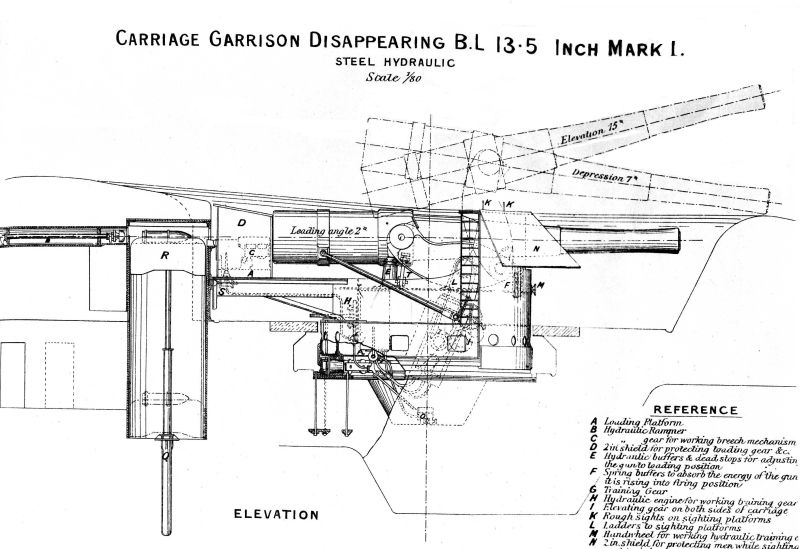
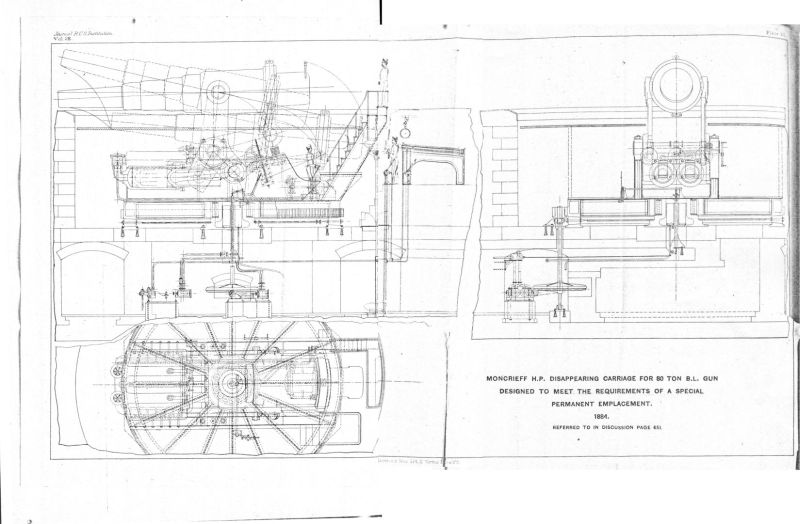
One of the heaviest guns mounted on the H.P. Disappearing principle was the 13.5-inch B.L. In 1887 two of these were approved for Penleee Point, Plymouth but only one was mounted in 1894. Moncrieff also presented a drawing of an 80-ton B.L. gun mounted on a disappearing principle during a lecture to the R.U.S.I. in 1884. This was 'Designed to meet the requirements of a special permanent emplacement'.
Fortifications in the UK where B.L.H.P. disappearing mountings are known to have been emplaced |
||||
Place |
6-inch H.P. |
9.2-inch H.P. |
10-inch H.P. |
13.5inch H.P. |
Lumps Fort: Portsmouth |
3 |
|
|
|
Eastney Batteries: Portsmouth |
2 |
|
|
|
Fort Cumberland: Portsmouth |
4 |
|
|
|
East Tilbury Battery: Thames |
4 |
|
2 |
|
Slough Fort: Thames |
2 |
2 |
|
|
Tynemouth Castle |
2 |
|
|
|
Spanish Battery: Tyne |
1 |
|
|
|
Landguard Left Wing Battery |
2 |
|
1 |
|
Paull Point Battery: Humber |
3 |
|
|
|
Whitesand Bay Battery: Plymouth |
2 |
|
|
|
Penlee Point: Plymouth |
2 |
|
|
1 |
Barton's Point |
2 |
|
||
Grain Fort |
2 |
|||
Harwich Beacon Hill |
1 |
|||
A battery for two 6inch and two 9.2inch BLHP guns was proposed for Frenchman's Point Battery in 1888 but no work was done on this.
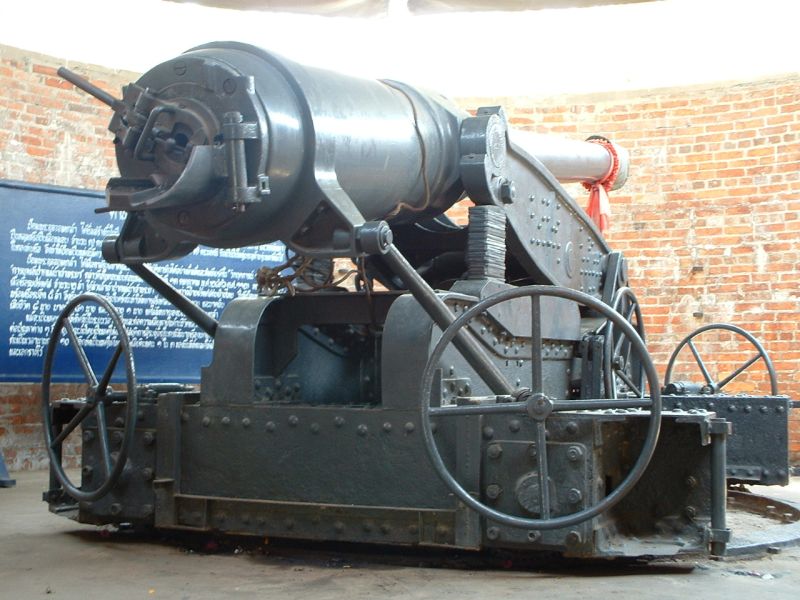
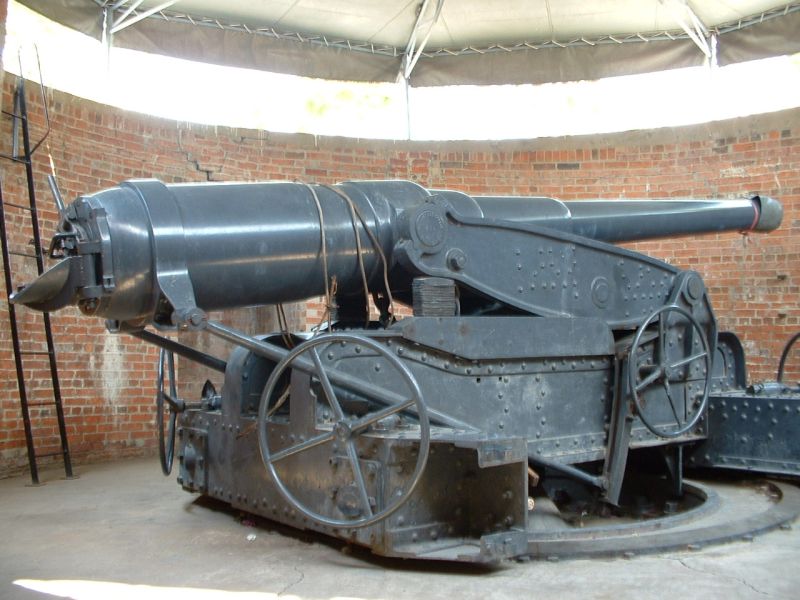
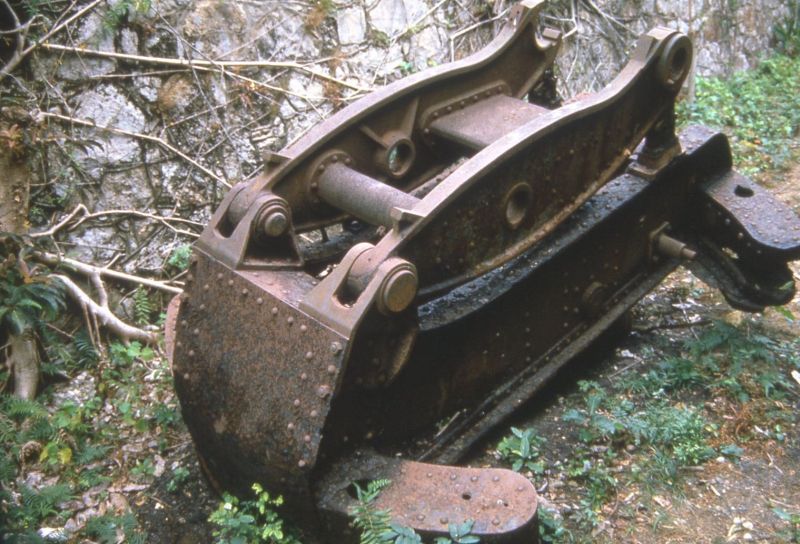
The idea of disappearing guns was eventually laid to rest when long range B.L. guns made them obsolete. It was no longer necessary to hide your guns when they could fire at an enemy several miles away. The H.P. mounting could not be fired at angles above 20 degrees and were declared obsolete by 1913. Some were retained for the duration of the First World War. None of the U.K. mountings have survived although the Royal Engineers brought one 6-inch H.P.mounting back with them when the British left Hong Kong. It is hoped that this might eventually be mounted at Lumps Fort Eastney, by the Royal Marines Museum.
 |
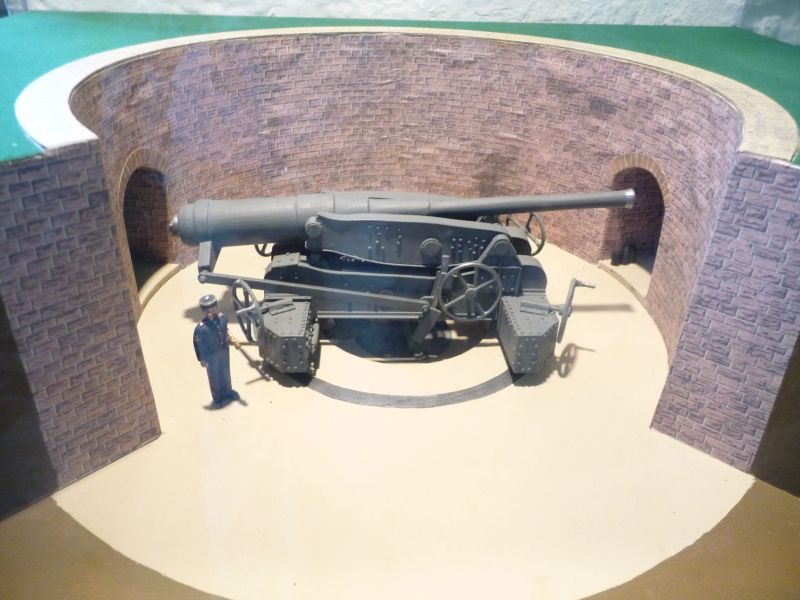 |
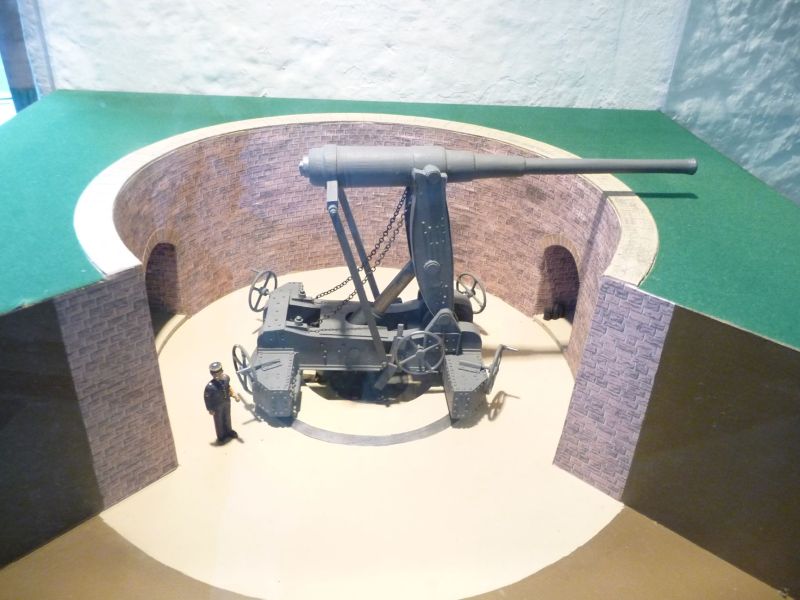
A model of a 6-inch B.L. H.P. at The Nothe Fort Weymouth - Firing position |
A model of a 6-inch B.L. H.P. at The Nothe Fort Weymouth - Loading position |
 |
 |
 |
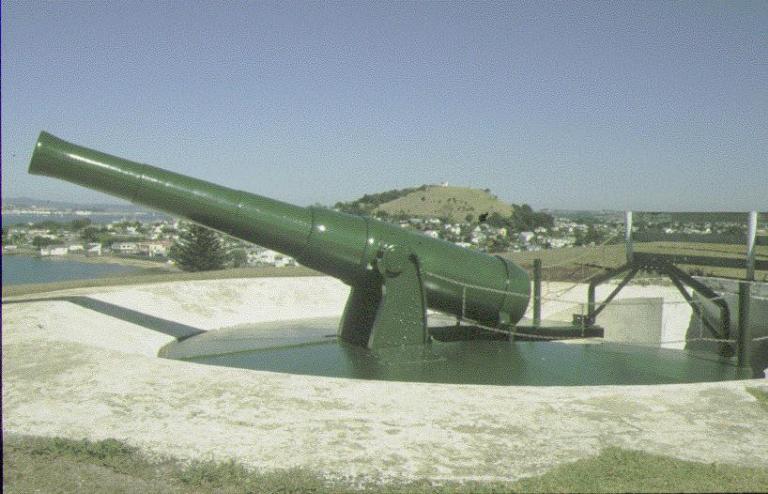 |
6-inch B.L. H.P. |
6-inch B.L. H.P. |
8-inch B.L. H.P. |
8-inch B.L. H.P. |
 |
 |
 |
 |
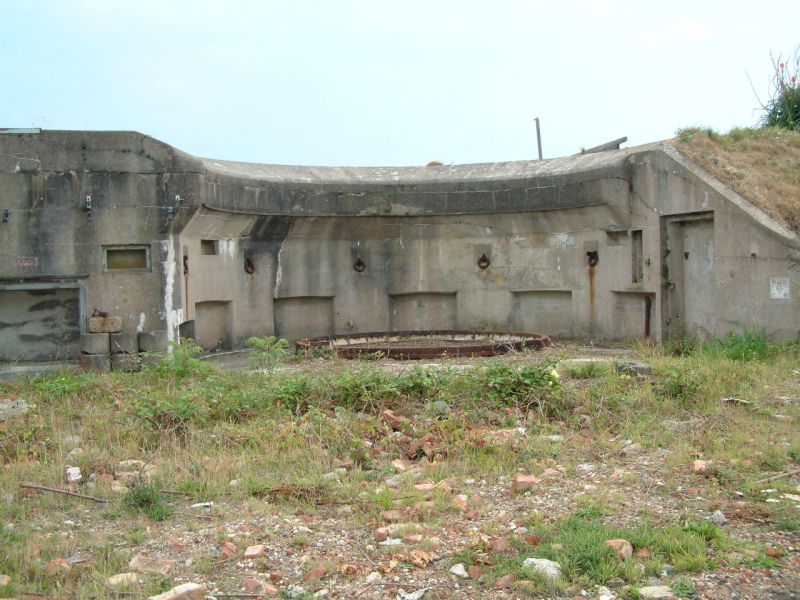
6-inch B.L. H.P. emplacement: Eastney Fort East Portsmouth |
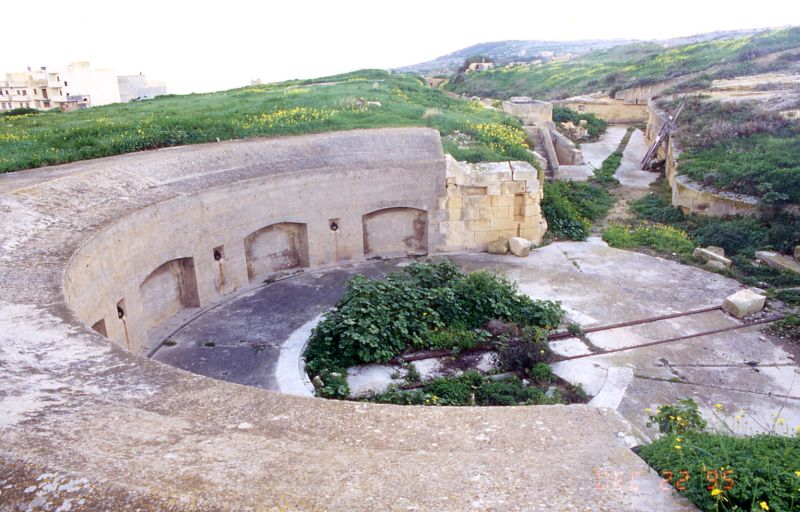
10-inch B.L. H.P. emplacement: Del Grazia Battery: Malta |
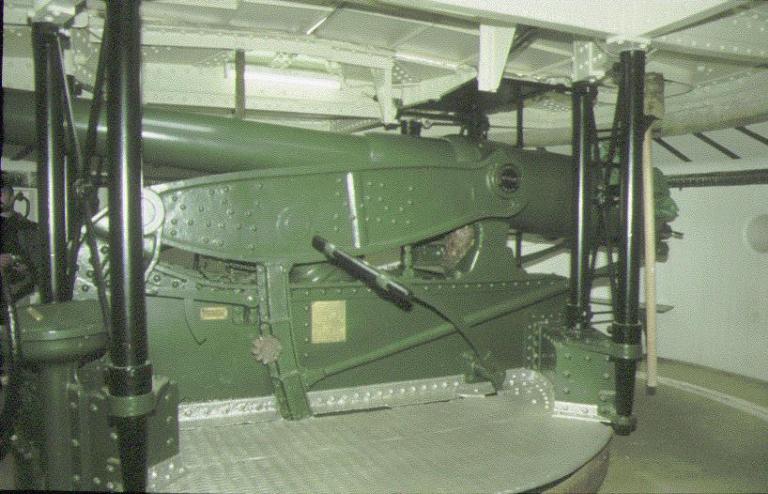
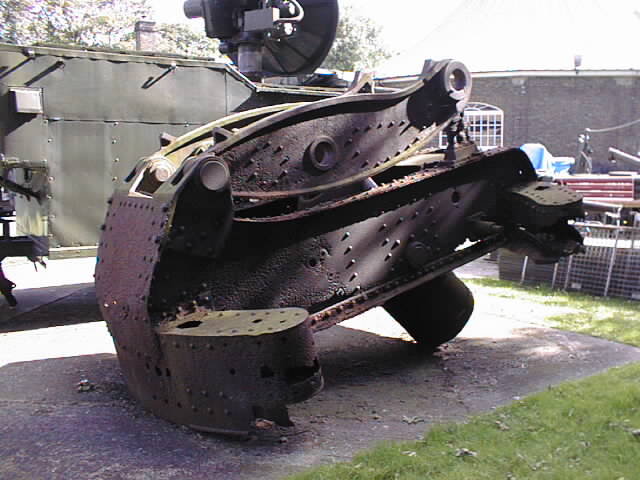
6-inch B.L. H.P. mounting at Woolwich. |
The same Woolwich mounting at Hong Kong. |