

Pattern I
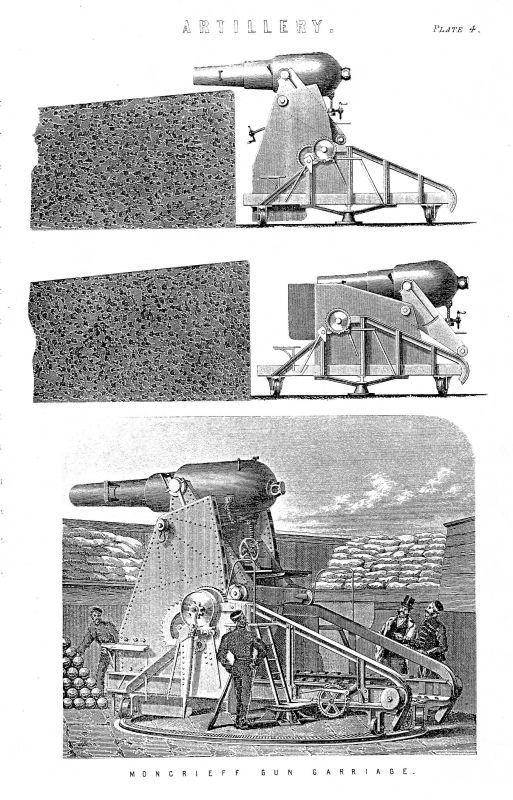
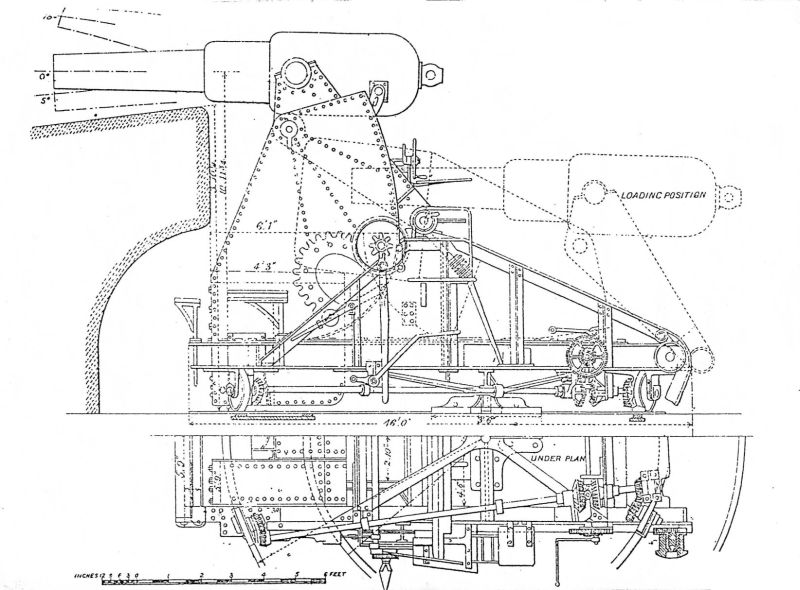
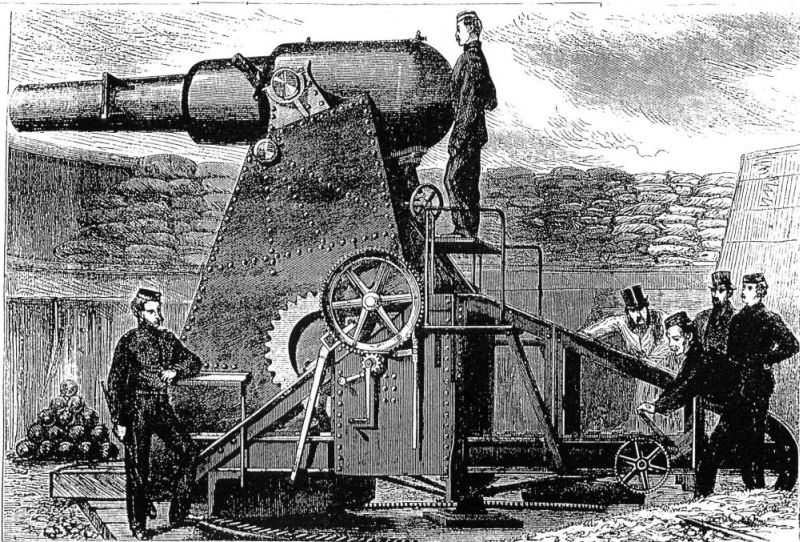
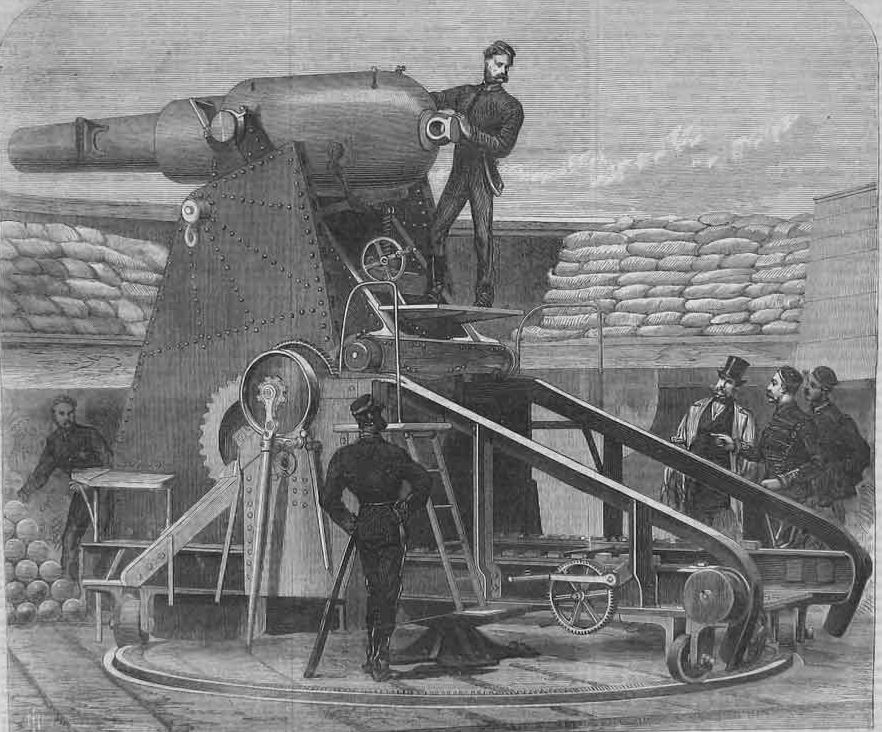
The gun with its carriage are placed in a structure termed an elevator, which rolls upon a traversing platform and which is so formed as to bring the gun into the required position, either for loading or running up. At the opposite end of the elevator there is a counterweight which is raised by the force of the recoil as the gun rolls back to the loading position
|
7inch R.M.L. of 7 tons |
 |
|
Pattern I Moncrieff |
Pattern II
The Pattern II mounting has an elevator which itself forms the carriage for the gun.
|
7-inch R.B.L.
|
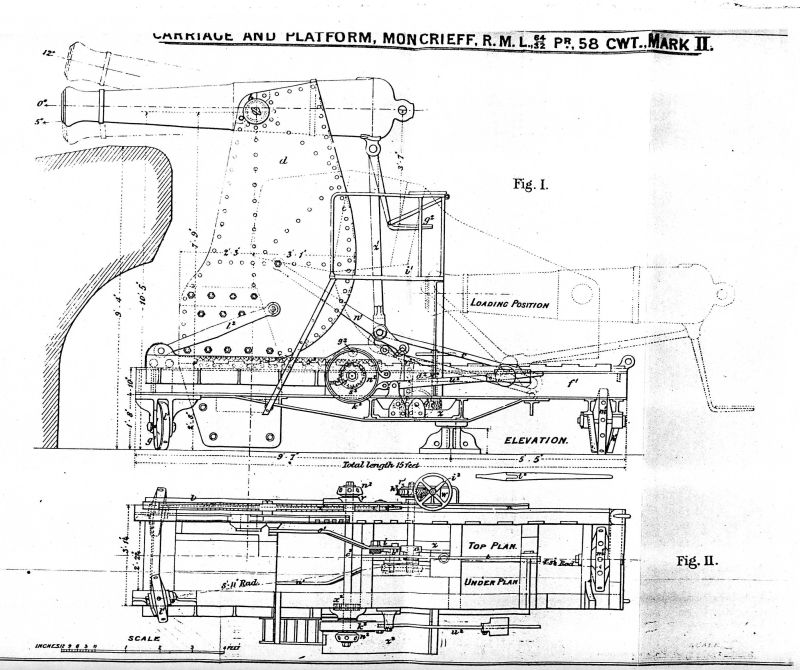 |
64pr R.M.L. |
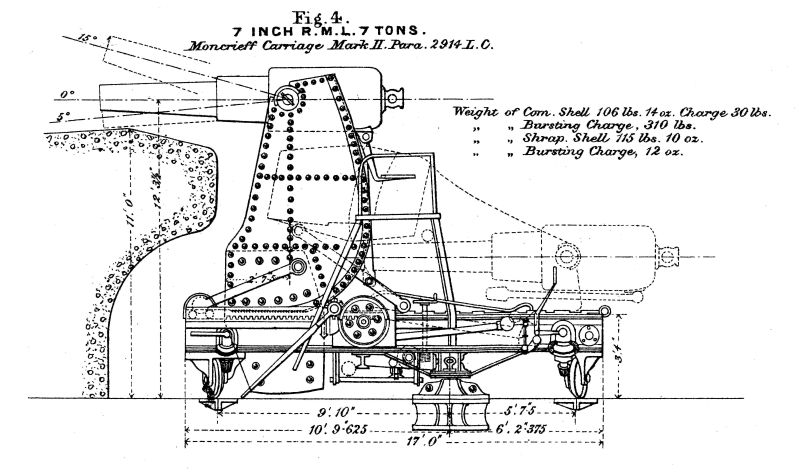 |
7-inch R.M.L. of 7tons |
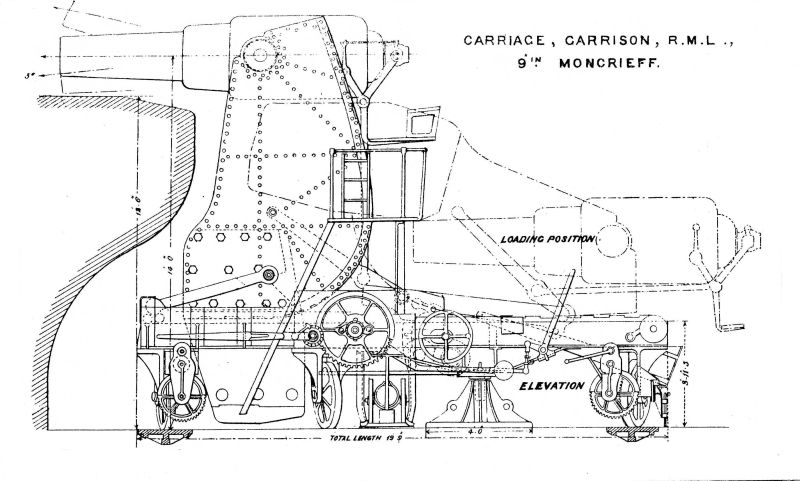 |
9-inch 12ton R.M.L. |
|
9-inch Mounting from |
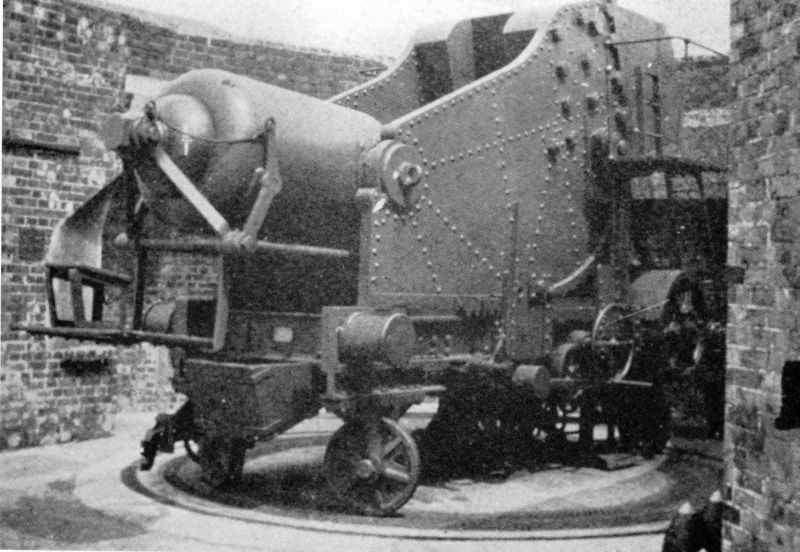 |
9-inch 12-ton at Newhaven Fort |
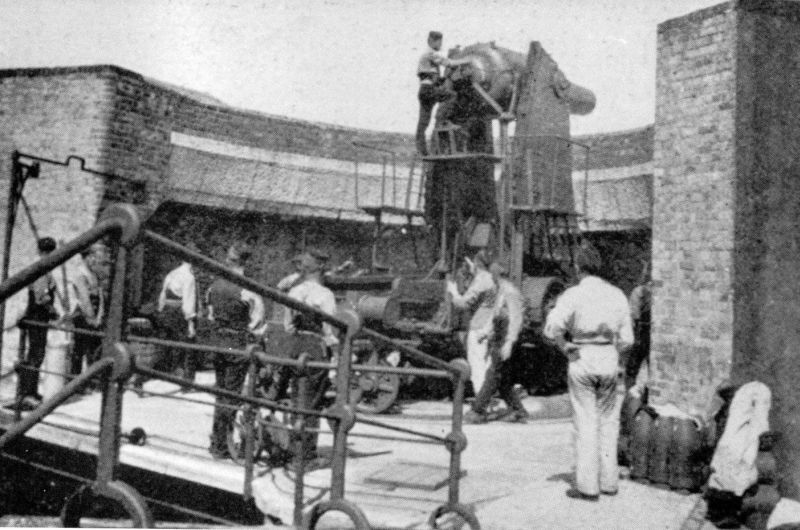 |
9-inch 12-ton at Newhaven Fort |
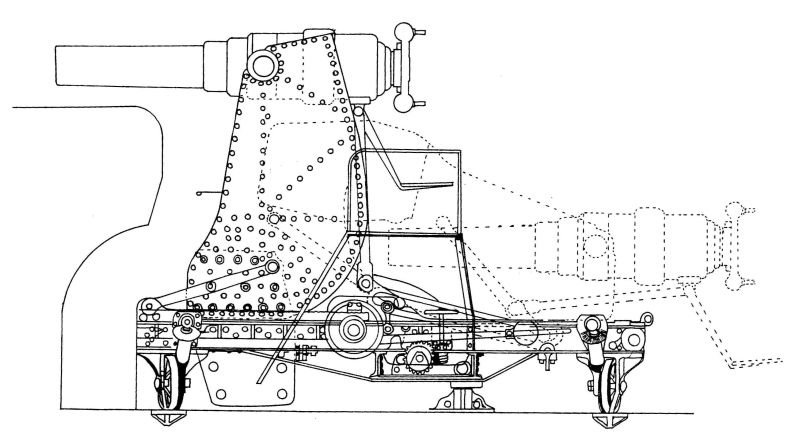
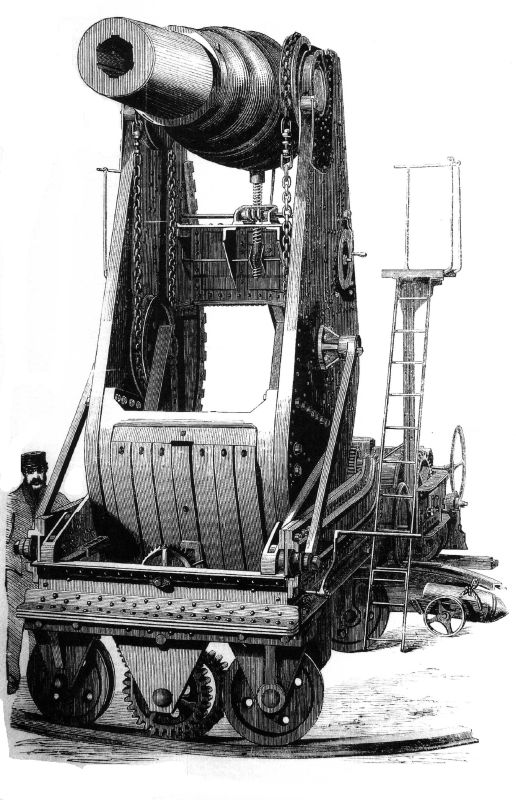
The Moncrieff Disappearing Counterweight Carriage
In the 1850s a Captain Moncrieff brought to the attention of his commanding officer an ingenious design for a novel way of mounting a gun. Moncrieff has observed that during a bombardment in the Crimea the British guns were firing through embrasures which exposed both the gun and the crew to enemy fire. He thought that by dispensing with embrasures he could protect the gun and the gun crew from direct fire. He set about designing a gun which, by means of a simple fulcrum, could be raised for firing over the parapet and then having fired could be lowered behind the parapet where it would be protected and invisible to the enemy. On June 4th 166 he submitted his design to the Royal United Services Institution. Then began a very long and arduous battle to get recognition for his method of mounting guns.
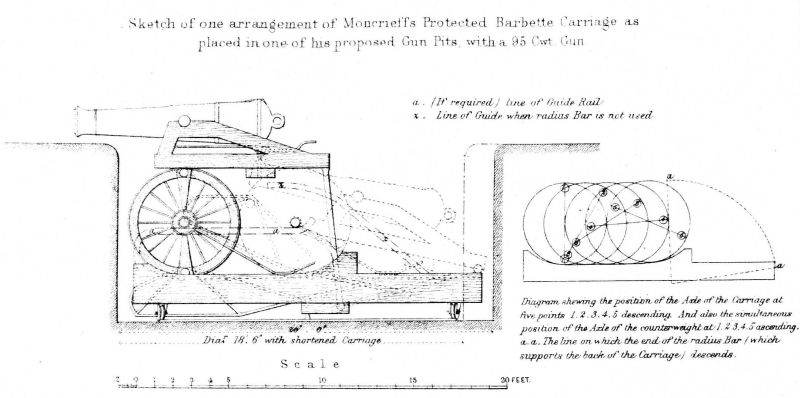
His design changed and became more complicated over time until eventually he persuaded the Government to trial his method. In 1871 a report was issued on Captain Moncrieff's Protected Barbette Traversing Carriage. The Ordnance Select Committee stated that they needed to set the matter at rest. Moncrieff had supporters in high places, including His Royal Highness the Field Marshal Commanding in Chief, but he also had many opponents.
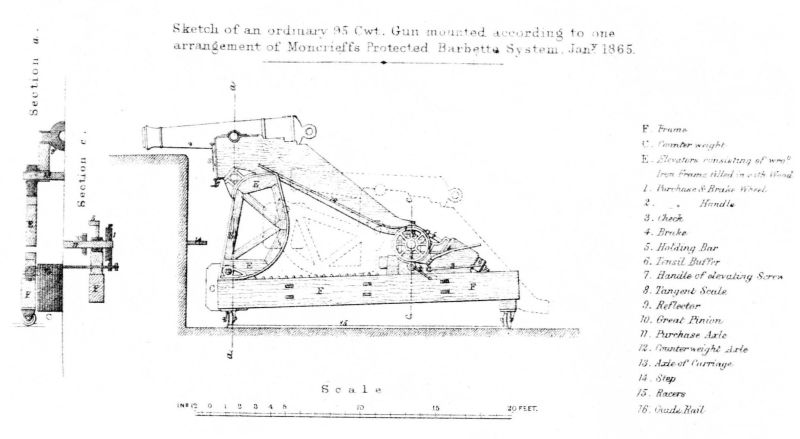
It was decided that a carriage be made for a 7-inch gun of 7-tons at the Royal Carriage Department and then be put for trial. Moncrieff was to be rewarded with £500 to cover outlay incurred by him. He was to receive £15,000 as a reward for the invention, £10,000 to be paid at once. He was to remunerated at the sum of £1,000 per annum, to be continued so long as the Government required his services.
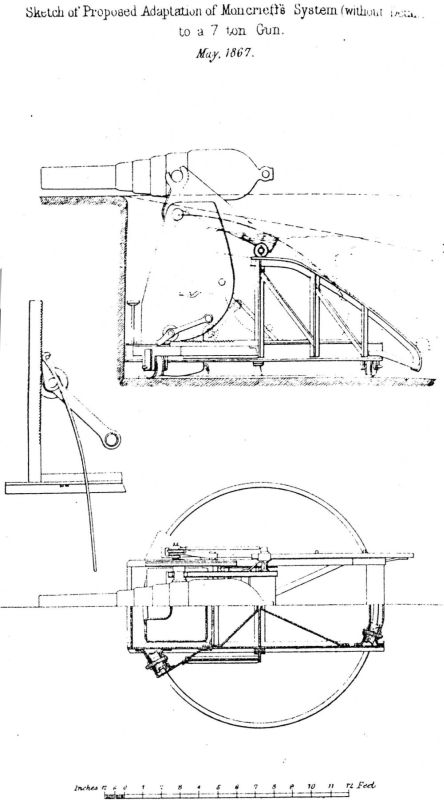 |
Sketch of a proposed Adaptation of Moncrieff's System for a 7-ton Gun. presented to the Royal United Services Institute in his lecture entitled Further Particulars Regarding Moncrieff's Protected Barbette System June 1867. |
The battle was not over. There were many voices against him and his method of mounting guns was considered by some to be not necessary for coast defence where unlimited lateral range was not of vital importance. Argument and counter-argument were considered by the RUSI until Moncrieff's invention was finally adopted, in a limited capacity, by mounting twenty 7-inch 7-ton guns in the Severn and Cork defences. In December 1871 approval was given for Flatholm Battery to receive nine, Lavernock Battery at Cardiff had four, Carlisle Fort at Cork harbour had four and Camden Fort Cork had three. This mounting was designated as the Pattern I mounting.
Moncrieff continued to develop the idea, despite opposition from officers who considered that guns in casemates and guns behind iron shields represented better value for money and produced a better defence for our ports and harbours. Moncrieff's system was never fully employed in the way that he intended. by dispressing guns in pits that were invisible to an enemy until they were raised to the firing position Moncrieff had hoped to dispense with the huge cost of providing casmated fortifications with guns protected behind immensely expensive iron shields. His invention proved to be cumbersome and difficult to maintain and operate with, a slow rate of fire. It was also prone to jamming of the mechanism. Eventually in 1877 fourteen Moncrieff mountings of the new Pattern II carriage were ordered for Plymouth. Here they were scattered thoughout the defences by placing Moncrieff pits on the salients of existing forts, hardly the place where Moncrieff wanted them. These mountings were either for the 7-inch R.B.L. gun or the 64pr RML gun. At Plymouth they were to be mounted as follows: Tregantle, Scraesdon and Staddon forts had two each. Crownhill had two, although three were intended, Efford had three whilst Stamford, and Forder had one each. The one at Forder was later struck off the order. In Malta Fort St. Lucian held four 64prs on Moncrieff Counterweight carriages, whilst Fort Bingemma held two and Fort Pembroke one. The only one fitted at Dover was in Archcliffe Fort.
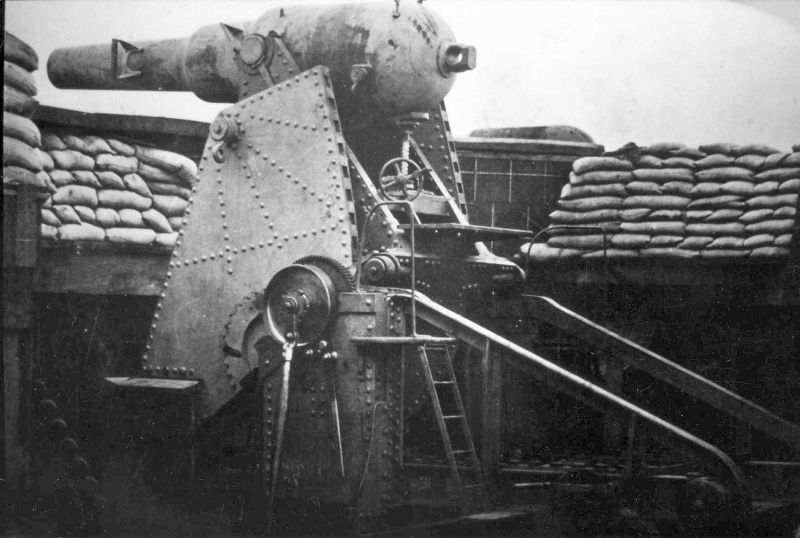
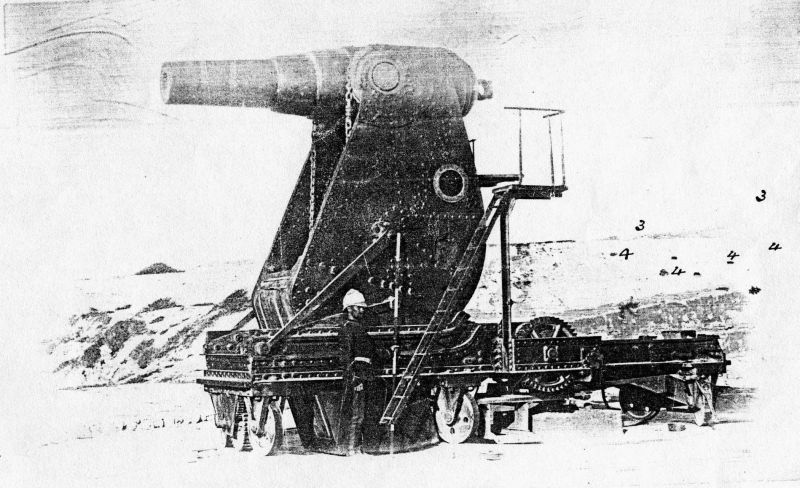
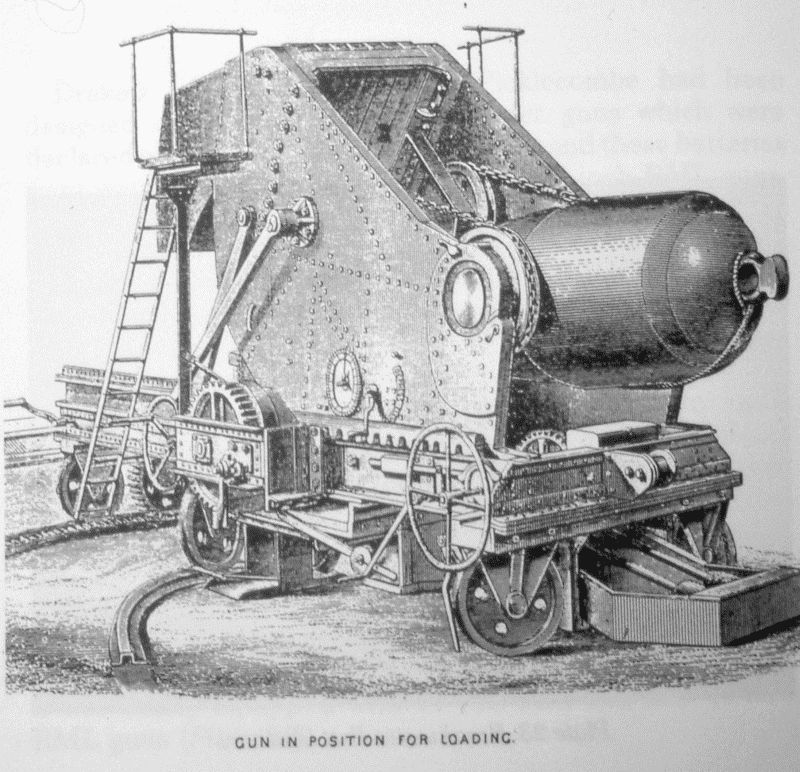
Eventually some forts at Milford Haven (Popton and Hubberstone) and at Portsmouth (Portsdown Hill Forts, Gosport's Fort Elson and the Hilsea Lines) also received Pattern II mountings. The largest gun to be mounted by this method was the 9-inch RML of twelve tons, two being sent for trial in 1873 at Newhaven Fort in Sussex. Some Moncrieff mountings were sold privately resulting in one for a 9-inch of twelve tons being discovered, after the bombardment of Alexandria, on the beach at Ras-El-Tin where it was completely exposed, without pit or parapet being provided to protect the crew. There were also two 11-inch 25-ton RMLs on Moncrieff Disappearing mountings fitted fore and aft to HMS Temaraire in 1875 but these were operated hydraulically rather than by a counterweight system.
 |
 |
A 9-inch 12-ton Moncrieff at Ras El Tin Lines Alexandria |
Sketch of the 9-inch 12-ton Moncrieff |
By now Moncrieff had moved on and was experimenting with guns mounted on hydropneumatic diisappearing carriages. This was much more successful. However, his firm, Easton and Anderson, had two rivals to compete for mounting guns by this method, the Royal Carriage Department and the Elswick Ordnance Company of Sir William Armstrong. This type of mounting, although adopted in some places, was rapidly made obsolete by advancements in the production of long range mountings for BL guns.
 |
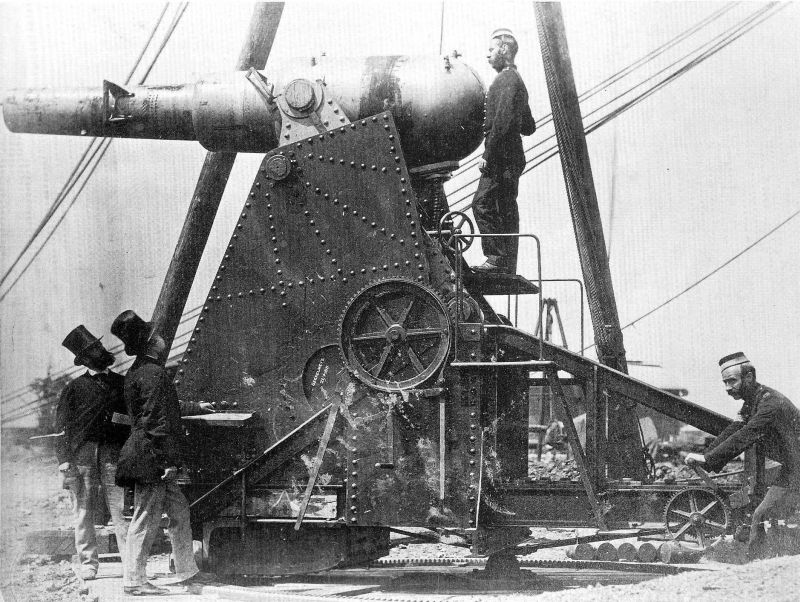 |
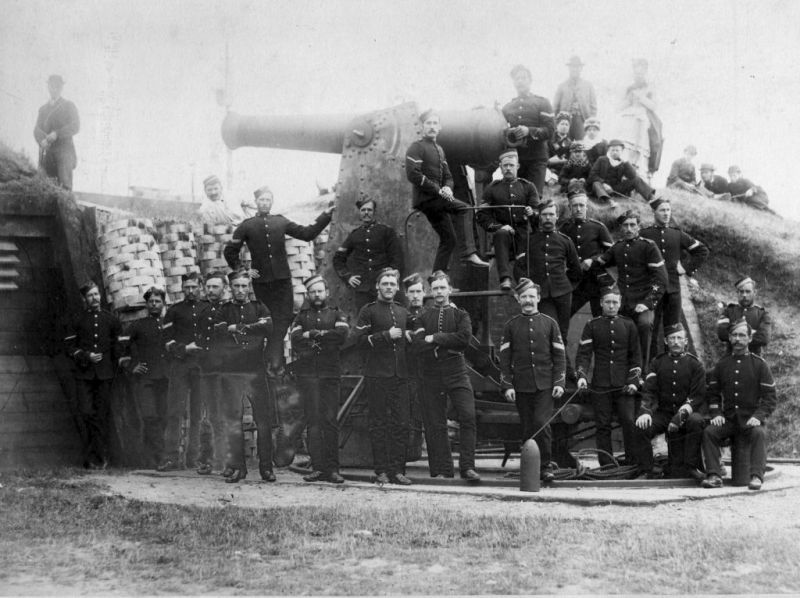
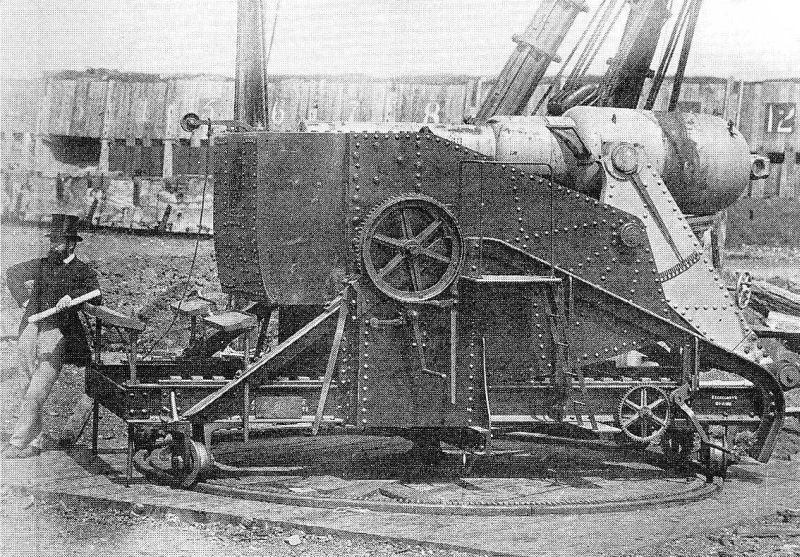
The Moncrieff Pattern I test mounting at Woolwich butts with Moncrieff posing
|
|
Strangely two 11-inch guns were mounted on Moncrieff Disappearing Carriages and were fitted to H.M.S. Temeraire in 1875. Moncrieff sold his idea to the Russians and by 1884 two 40-ton guns were mounted on a carriage and fitted to a vessel of the Black Sea fleet. Two were also fitted to each of the Baltic vessels Vice Admiral Popoff and Novgorod. These were circular Iron Clad vessels which were a spectacular failure as ships, finishing their life as floating forts. The Russians adopted Moncrieff's system for the 12-inch 50ton guns and a carriage for the 80-ton gun was under development for coast defence.
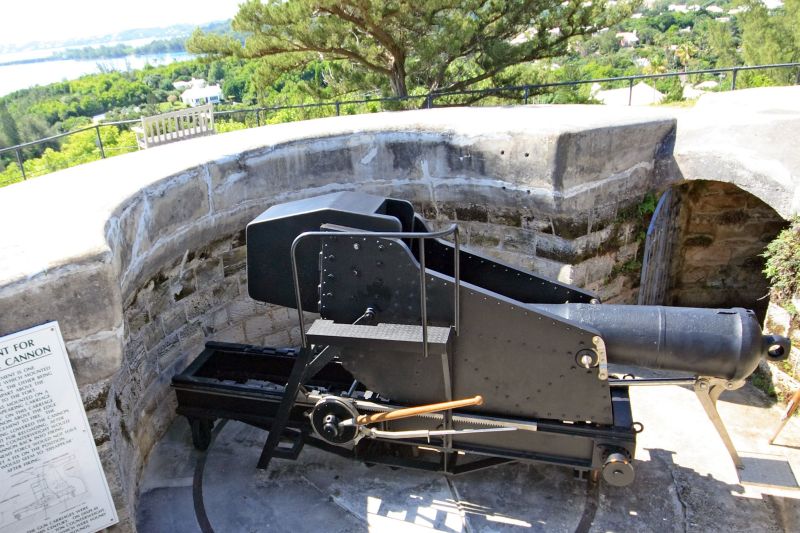
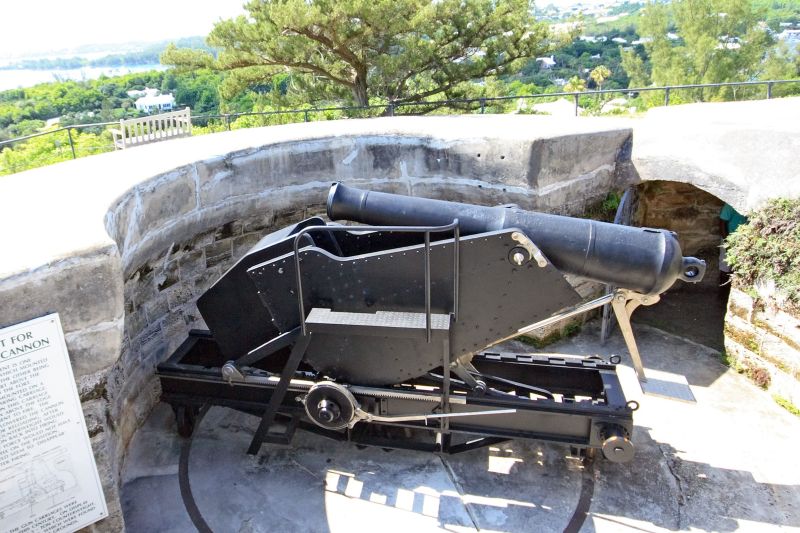
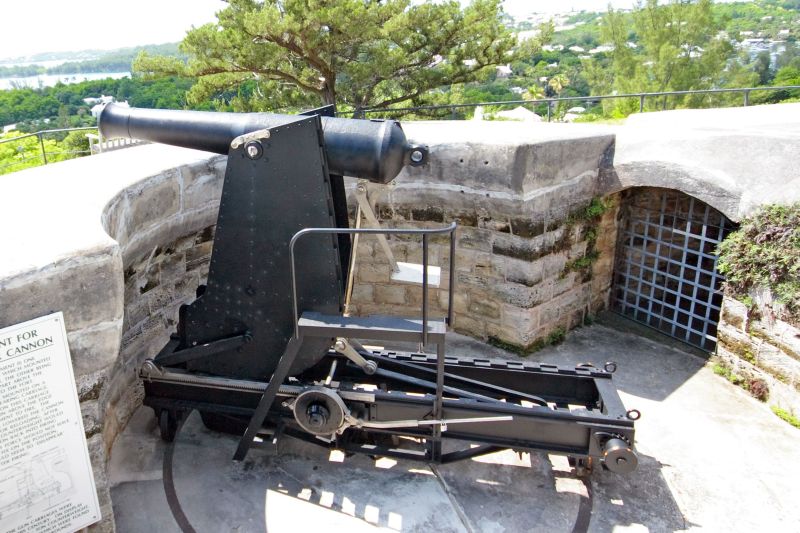
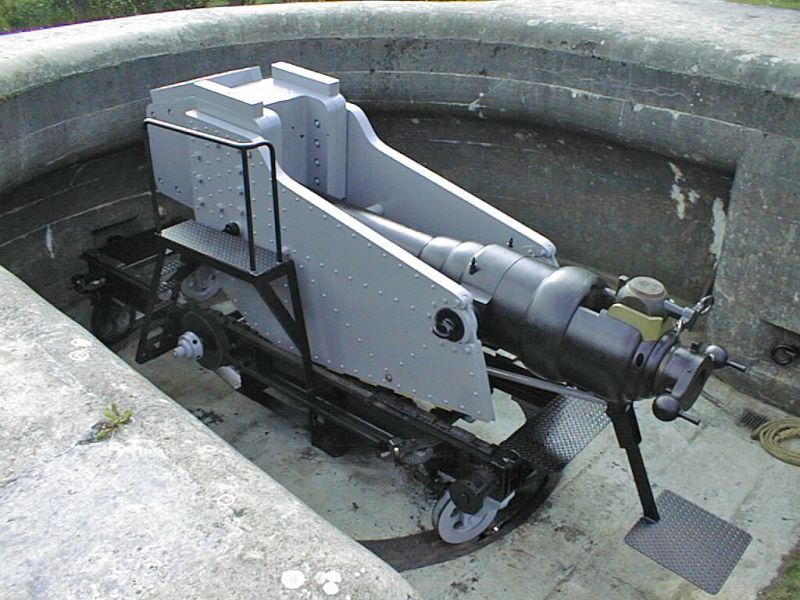
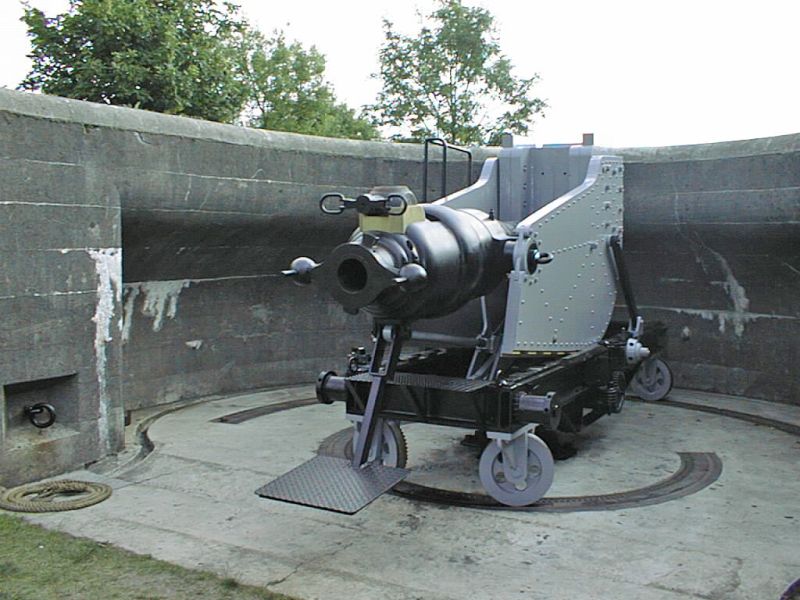
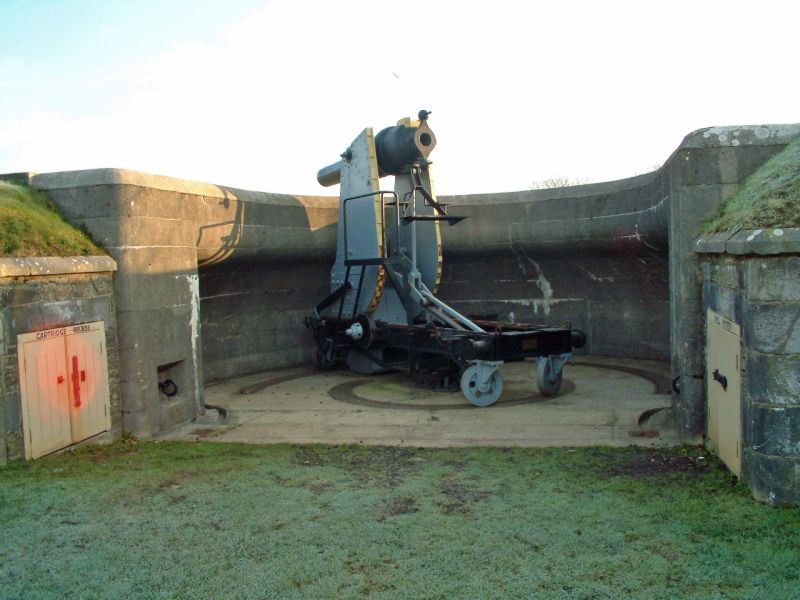
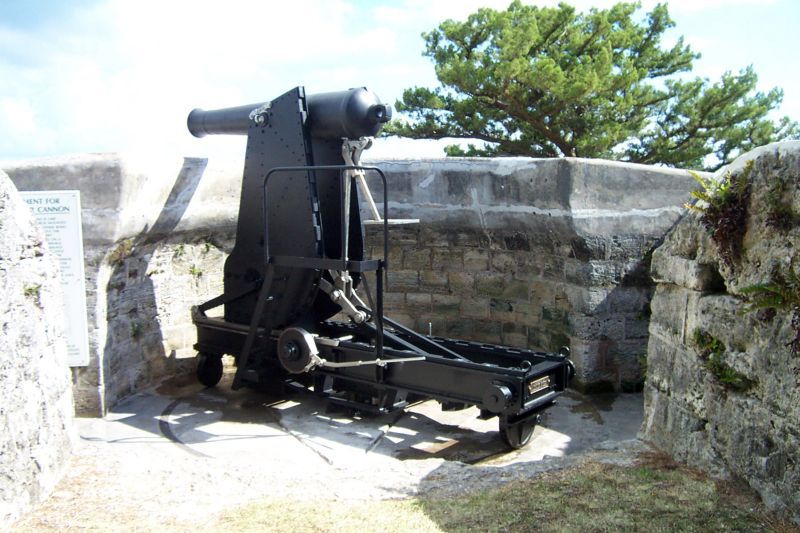
None of Moncrieff's Counterweight Carriage Mountings survive today. All were dismantled early in the 1900s although parts of the elevator and counterweight survived at Scaur Hill Fort in Bermuda. Today two replicas have been constructed, one for a 7-inch RBL gun at Crownhill Forts Plymouth and another for a 64pr RML gun at Scaur Hill Fort Bermuda. Many of the pits constructed for the Moncrieff Mountings can still be seen at Portsmouth, Plymouth, Milford Haven and in foreign stations such as Malta (approx 17) and Bermuda.
 |
 |
 |
The Scaur Hill 64pr RML in the run-back (loading) position |
The Scaur Hill 64pr RML running up to the firing position. |
The Scaur Hill 64pr RML in the run-up (firing) position. |
The sequence of photographs above show the 64pr R.M.L. on a Moncrieff Pattern II mounting. at Scaur Hill Fort, Bermuda.
They were kindly supplied by Andrew Pettit, Parks Planner of the Department of Parks, Bermuda.
Andrew reports that Bermuda had nineteen C pivot mountings of this type for 64pr RML guns.
Fort Langton - 4
Fort Hamilton - 7
Fort Prospect - 6
Fort Scaur - 2
Tony Hill reports in his book Guns and Gunners at Shoeburyness, that the two test pits for the 7-inch and 9-inch RMLs still survive at Shoeburyness, one of them heavily altered for later use. In recent years one of these has been destroyed.
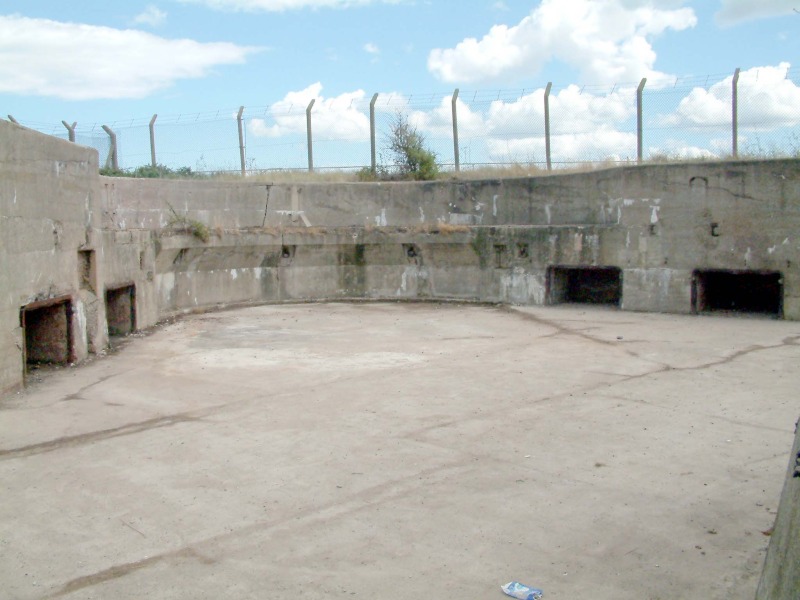
The experimental Moncrieff pit at Shoebuyness in 2009
 |
 |
 |
 |
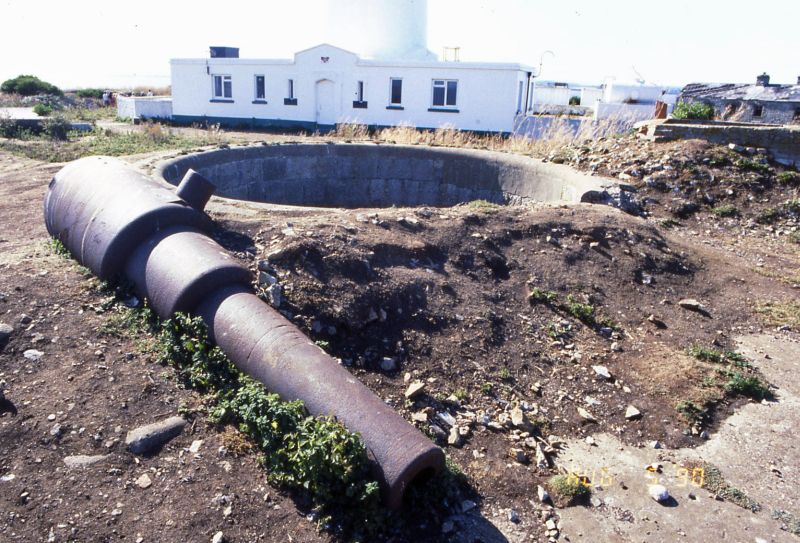
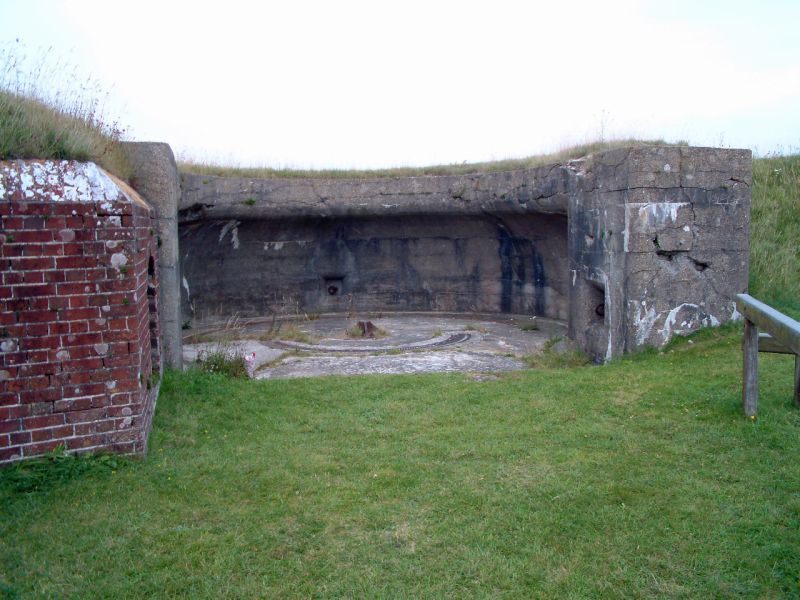
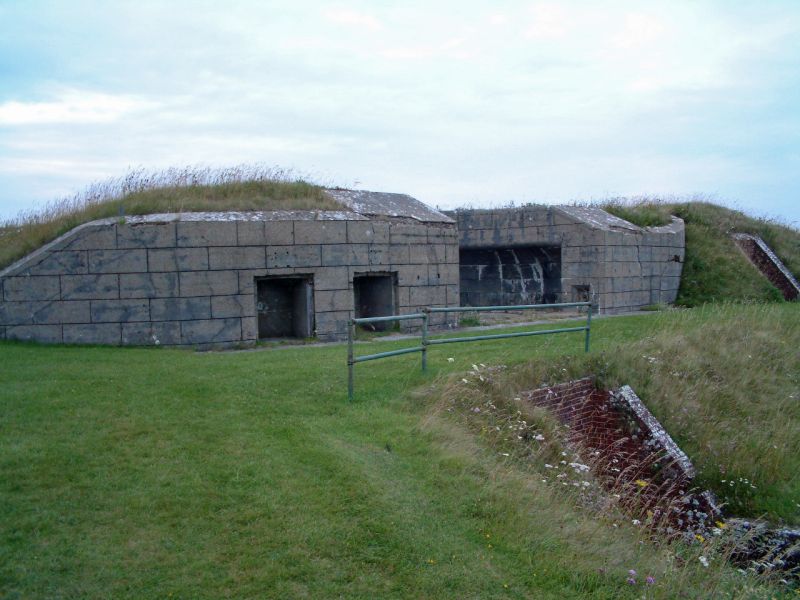
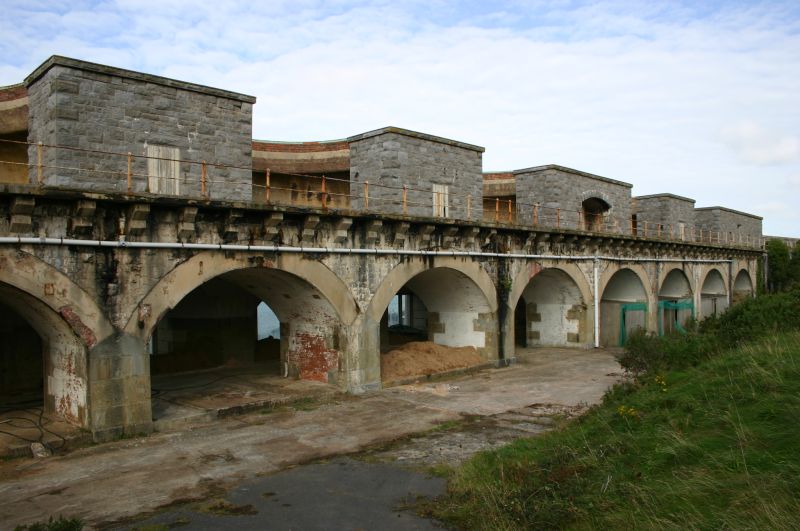
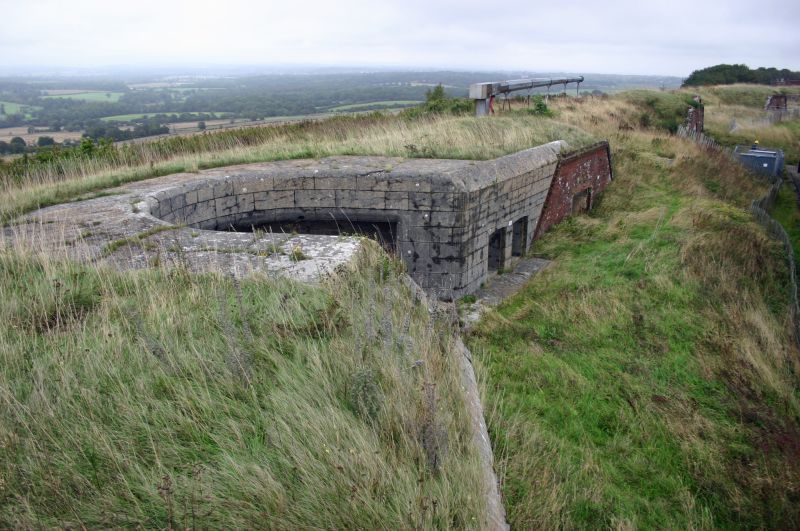
Flatholm Island Lighthouse Battery |
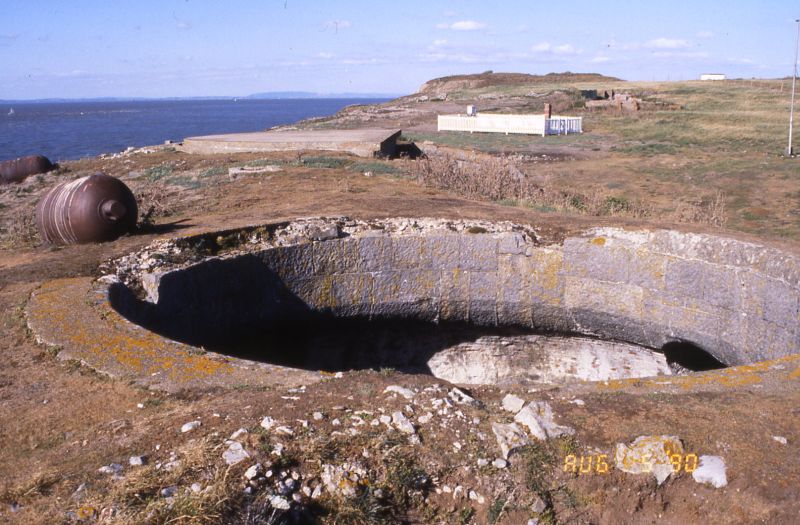
Flatholm Island |
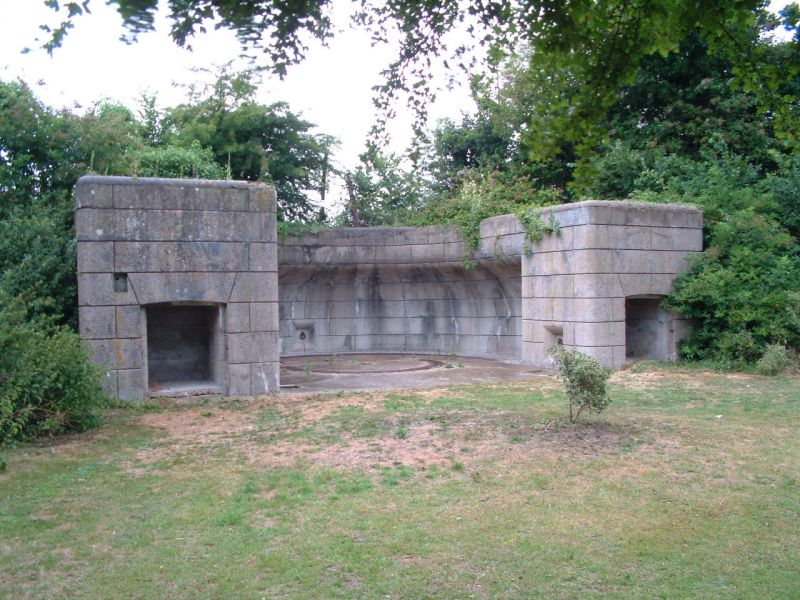
Hilsea Lines |
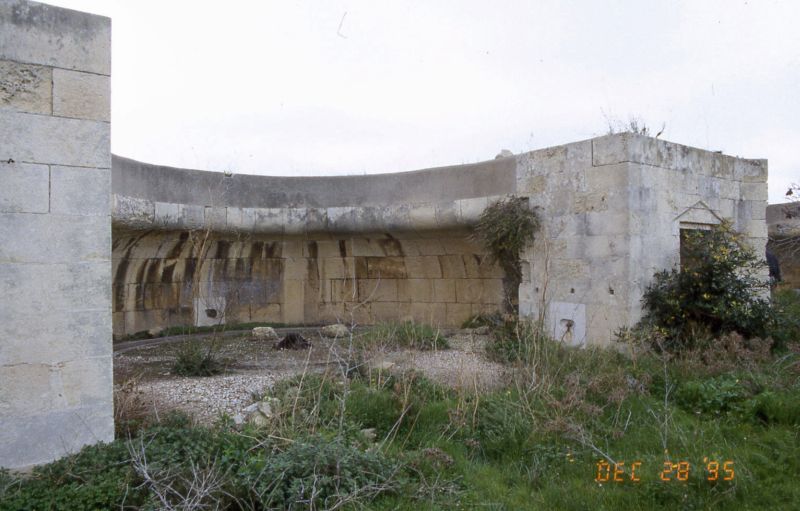
Malta |
 |
 |
 |
 |
Fort Purbrook Portsmouth |
Fort Purbrook Portsmouth |
Fort Popton Milford Haven |
Fort Southwick Portsmouth |
 |
 |
 |
 |
Replica at Crownhill Fort Plymouth |
Replica at Crownhill Fort Plymouth |
Replica at Crownhill Fort Plymouth |
Replica at Scaur Hill Fort Bermuda |
 |
 |
 |
 |
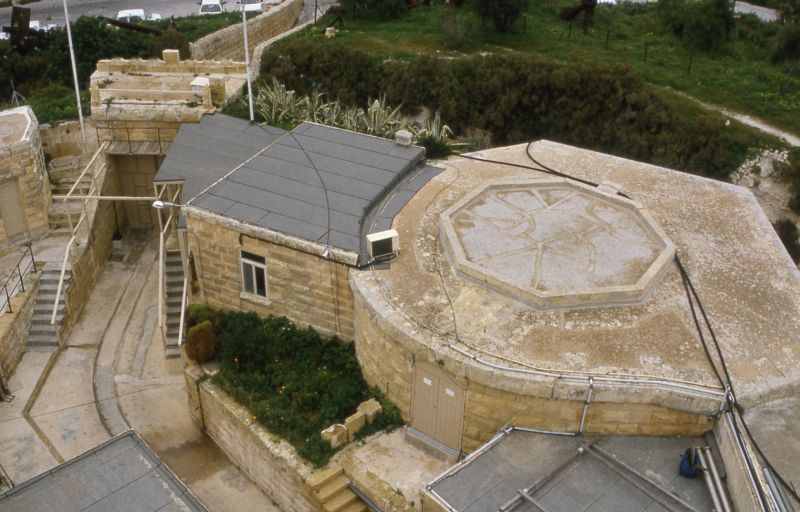
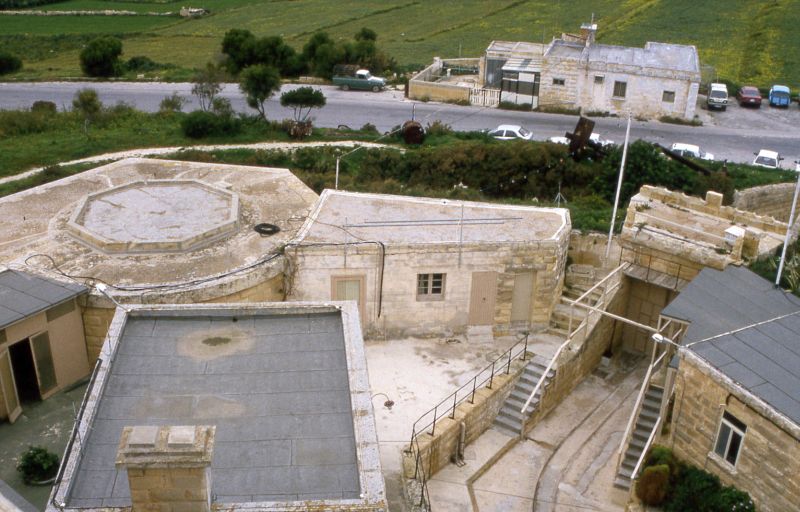
Fort St.Lucian Malta |
Fort St.Lucian Malta |
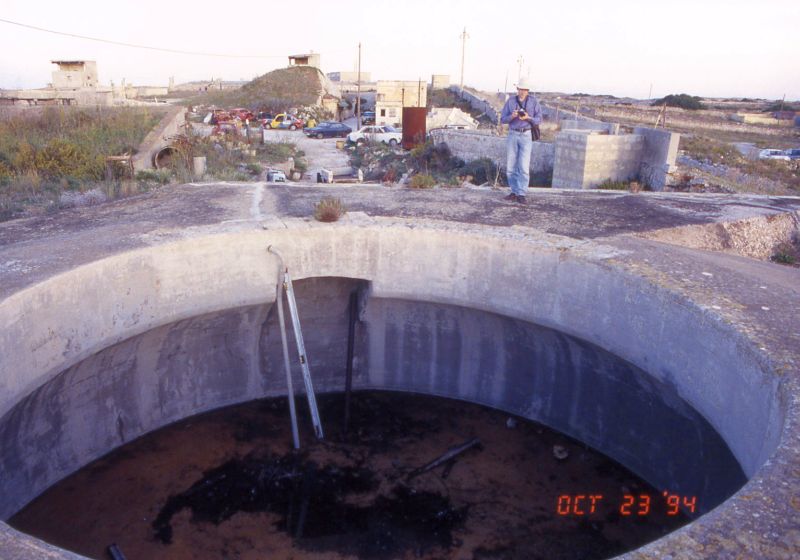
Fort Bingemma Malta |
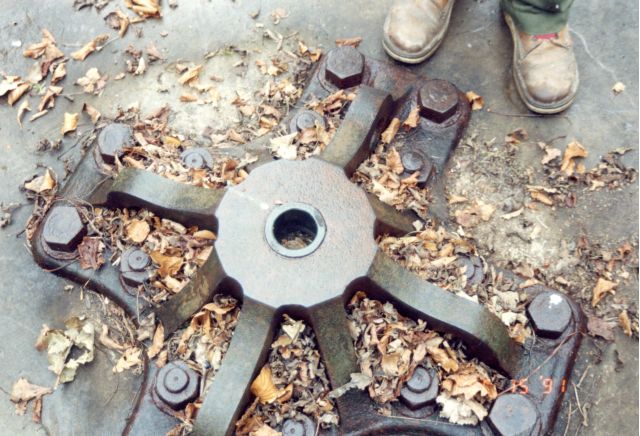
Pivot for a Moncrieff Mounting |
Download a data pamphlet about the Moncrieff Mounting 