

 |
 |
 |
 |
 |
 |
 |
32pr. S. B. B. L. Gun
A conversion from the 32 pr. SB gun of 42 cwt. cast iron 97.6 inches long: weight 42 cwt. carriage 14 cwt. 1 qtr (.9 ton) slide 13 cwt (.7 ton) Interrupted screw thread breech mechanism:
Gun crew 1 Captain and 6 gun numbers (1885 drill) or 1 captain and 5 gun numbers (1898 drill when using fixed ammunition)
Range 500 yards point blank
Charge 3lbs. R.L.G.3 Silk cloth no.1 class hooped with silk braid and choked with silk twist.
Projectile
case shot - made of sheet iron in three segments. It contains 730 mixed
metal balls 16 per lb the interstices being filled with powdered clay
and sand.
Intended for use in flanks and caponiers.
It fires over a
parapet of 2ft. 3-inches with 10 degrees of elevation and 15 degrees of
depression. Maximum recoil is 1ft. 8inches. The pattern was submitted for approval in 1882 although it was decided upon in 1878. 269
were required for the defences but in 1882 15 were manufactured. It was
decided that as the flank defence was the least important part
connected with the armament of a fortress any smoothbore gun of small
field calibre would suffice. No more were therefore to be made without
special orders.By 1885 Crownhill Fort received 14 x 32 prs as part of
it's peace-time armaments. In 1890 and 1891 trials took place at
plymouth to discover the efficiency of the breech mechanism. A rate of
fire of four rounds in 32 seconds was achieved.
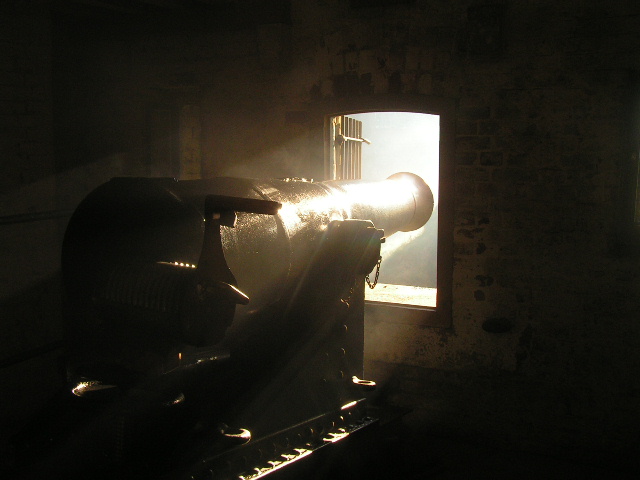
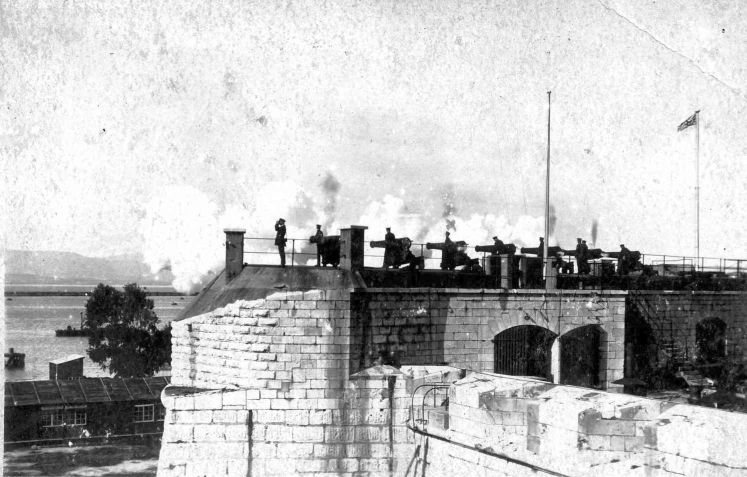
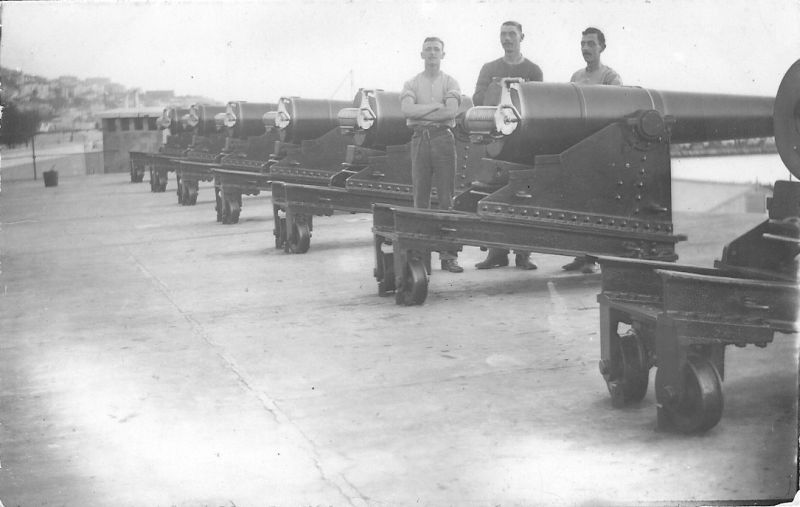
By 1913 some of the obsolete 32pdrs were placed as saluting batteries, with seven guns each, at Dover, Coalhouse and Amherst. Another was situated at Gibraltar. Seven of these guns were acquired by the Royal Armouries for display at Fort Nelson, where four can been seen in the North Caponier of the fort.
YouTube Videos
 |
32pr SBBL at Fort Nelson (D.Tabner) |
 |
32pr SBBL at Fort Nelson (D.Tabner) |
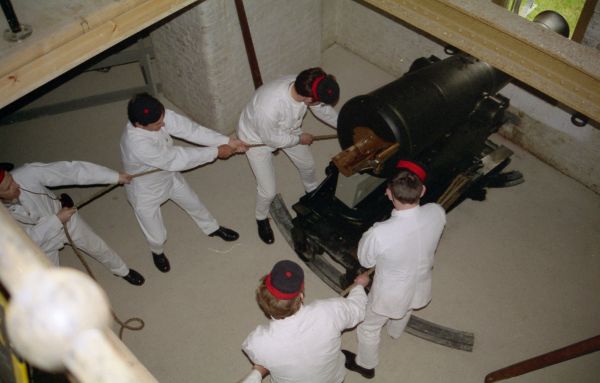
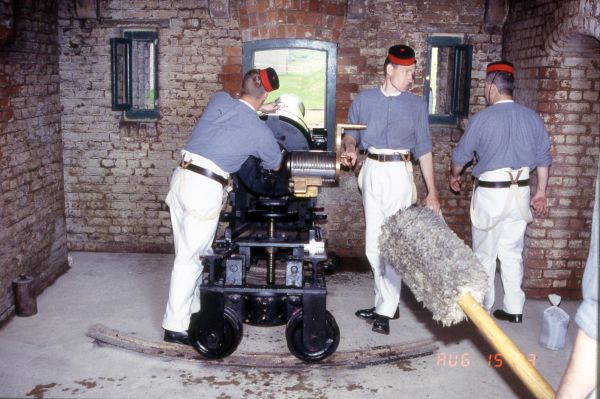
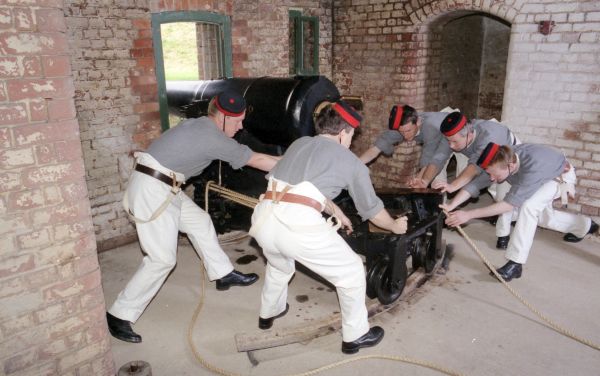
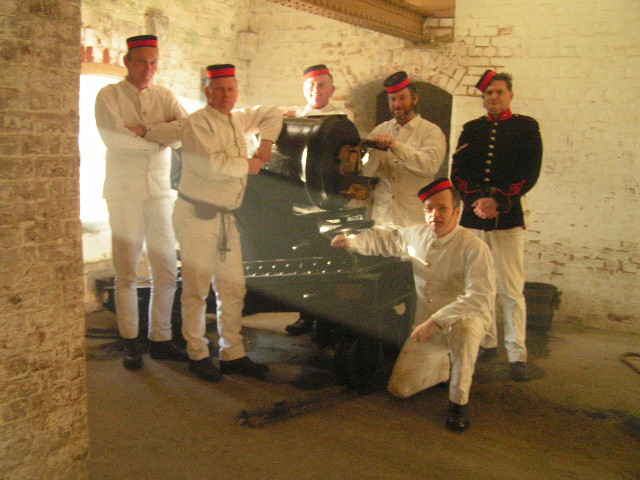
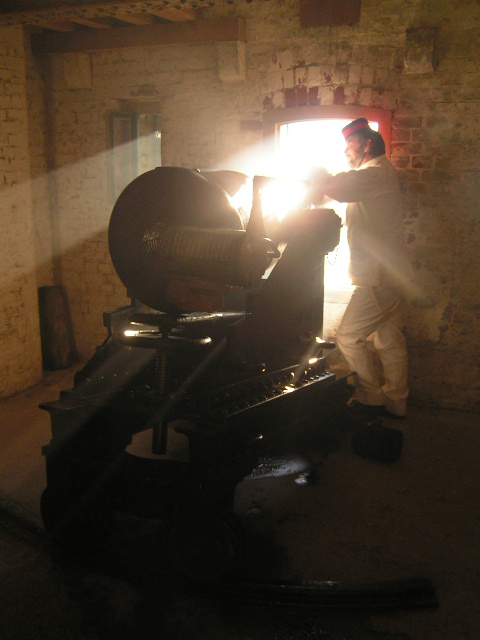
The 32pr S.B.B.L.
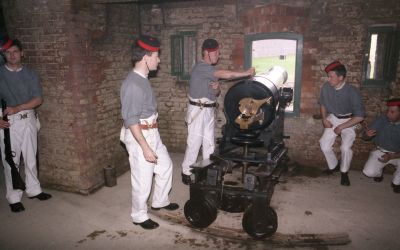
The Portsdown Artillery Volunteers firing the 32pr. SBBL in the North Caponier at Fort Nelson.
 |
 |
 |
|---|
 |
 |
 |
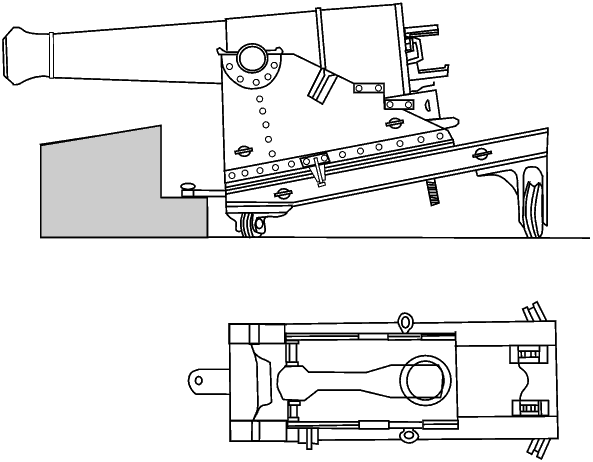
Download a data pamphlet on the 32pr.SBBL gun
 |
 |
32pr SBBL in one of the forts of at Milford Haven circa 1917 |
A saluting battery of seven 32pdr SBBL guns at Kings Bastion Gibraltar in 1920 |
 |
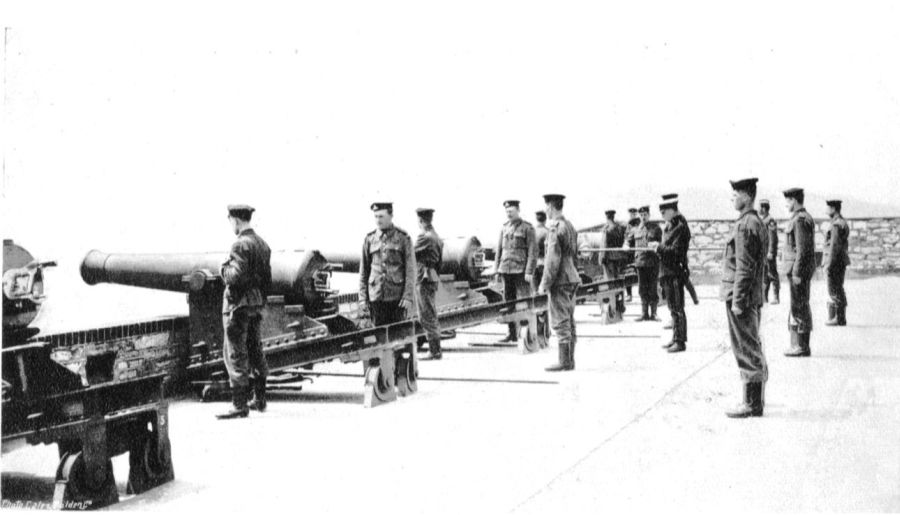 |
A saluting battery of seven 32pdr SBBL guns at Kings Bastion, Gibraltar. |
A saluting battery of seven 32pdr SBBL guns at Plymouth |